







What's Happening?
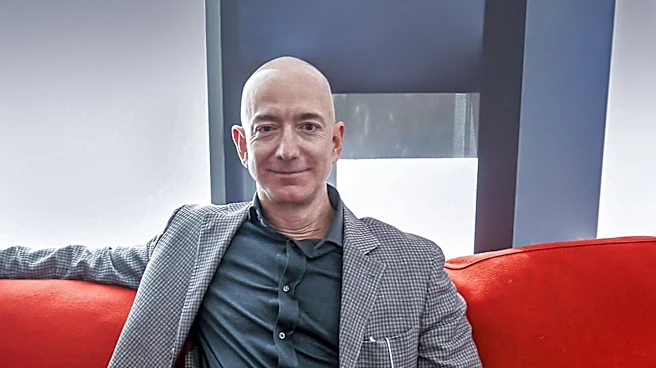
Jeff Bezos, founder of Amazon and the world's second-richest person according to Forbes, recently discussed the growing public animosity towards the wealthy during an interview with Fox News journalist Bret Baier at Blue Origin’s headquarters in Florida.
Bezos attributed this negative perception to an educational issue, suggesting that some are incorrectly taught to view society as a struggle between 'oppressors and the oppressed,' leading them to believe that success is inherently evil. He countered this by stating, 'Success is not synonymous with evil,' and illustrated his point by noting that one can become a billionaire even from humble beginnings, citing Raising Cane’s chicken chain as an example. Despite defending the wealthy, Bezos acknowledged a significant 'affordability problem' in housing, particularly for young people struggling to live near their workplaces due to high costs. He attributed this to supply and demand dynamics, arguing that subsidizing demand while restricting construction inflates prices, referencing Austin, Texas, where increased housing construction led to falling rents.
Why It's Important?
Bezos's comments are important as they offer a direct perspective from a prominent billionaire on the increasing societal debate surrounding wealth concentration in the U.S. His defense of wealth accumulation, framed as a result of hard work and innovation, challenges the narrative that often portrays the rich as antagonists. This discourse is particularly relevant given recent Pew Research findings indicating that a significant portion of young Americans view extreme wealth as immoral. His acknowledgment of the housing affordability crisis, while shifting blame from landlords to supply-side issues, highlights a critical economic challenge affecting millions of Americans. This perspective could influence policy discussions on urban development, zoning laws, and housing subsidies, potentially shaping how local and federal governments approach these complex issues. The debate over wealth and housing affordability has broad implications for social equity, economic mobility, and political stability in the United States.
What's Next?
The ongoing debate surrounding wealth inequality and housing affordability is likely to continue influencing public discourse and political agendas in the U.S. Bezos's remarks may prompt further discussions among policymakers, economists, and the public regarding the root causes of these issues and potential solutions. His advice to 'be wary of the politician who points to culprits' suggests a call for more pragmatic, solution-oriented approaches rather than divisive rhetoric. This could encourage a focus on policies that address housing supply constraints, such as deregulation of construction or incentives for developers, rather than solely on demand-side interventions. The public's reaction, particularly from groups concerned about wealth concentration, will be crucial in shaping the political landscape, potentially leading to increased pressure for wealth taxes or other redistributive policies. The discussion also sets the stage for future engagements between business leaders and the media on these pressing economic and social issues.
Beyond the Headlines
Bezos's commentary delves into the deeper cultural and ethical dimensions of wealth in American society. His assertion that viewing success as evil is 'incorrect' touches upon the American ideal of meritocracy and the 'American Dream,' where hard work is supposed to lead to prosperity. The tension between this ideal and the reality of growing wealth disparities raises fundamental questions about economic justice and opportunity. The example of Raising Cane’s, a fast-food chain, becoming a billionaire-generating enterprise, underscores the diverse pathways to wealth in the U.S. economy, yet it also implicitly highlights the vast scale required for such ventures to achieve extreme wealth. The housing crisis, which Bezos acknowledges, is not merely an economic problem but a social one, impacting quality of life, community stability, and intergenerational wealth transfer. His framing of the housing issue as a supply-and-demand problem, rather than one of landlord culpability, reflects a common argument in free-market economics, but it also sidesteps the ethical considerations of housing as a fundamental right versus a market commodity. This ongoing dialogue will likely continue to shape societal values and policy priorities.