







What's Happening?
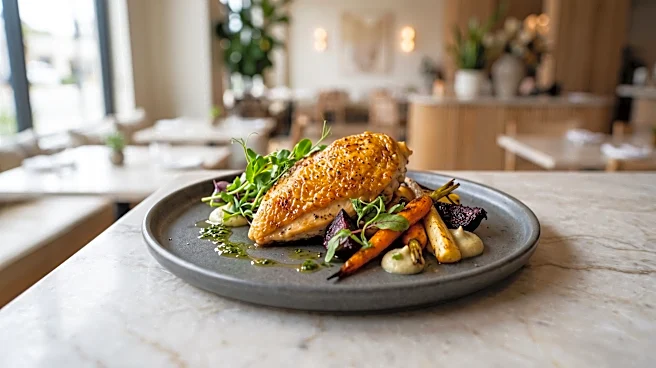
UPSIDE Foods, a U.S.-based company, has announced the commercial rollout of its cultivated chicken product, UPSIDE Chicken, in California. This product combines cultivated chicken cells with plant-based ingredients and is now being served in various restaurants
and institutional dining programs, including Stanford Dining. The company claims an annual production capacity exceeding 1 million pounds of finished product, which includes both cultivated cells and plant-based components. The production process involves taking cells from heritage-breed chicken eggs, multiplying them in bioreactors of over 20,000 liters, and then combining them with plant-based proteins like soy protein isolate, pea fiber, and olive oil. The mixture is then shaped, frozen, and shipped in formats such as diced, shredded, and chef-style cuts. UPSIDE Foods has also secured regulatory clearance from the FDA and USDA for two distinct cultivated meat products and obtained halal certification.
Why It's Important?
This commercial launch signifies a major step forward for the cultivated meat industry in the U.S., demonstrating increased scalability and market readiness. The ability to produce over 1 million pounds annually, even with plant-based ingredients, indicates a significant advancement in manufacturing capacity for cultivated food products. The availability of UPSIDE Chicken in California restaurants and dining halls introduces this novel food to a broader consumer base, potentially influencing public acceptance and demand for alternative protein sources. Regulatory clearances from the FDA and USDA, along with halal certification, establish a precedent for the safety and marketability of cultivated meat, which could encourage further investment and innovation in the sector. This development could also impact traditional meat industries by offering a new competitive product that addresses concerns about sustainability and ethical sourcing.
What's Next?
UPSIDE Foods plans to continue expanding its production capacity and reducing manufacturing costs, with an eventual goal of entering retail markets such as supermarkets. The company's CEO, Dr. Uma Valeti, has indicated that the supply price to foodservice operators is already competitive with premium organic chicken, suggesting a path towards broader affordability. The success of this initial rollout in California will be crucial for demonstrating consumer demand and attracting further investment into the cultivated meat sector. Future developments will likely focus on increasing the proportion of cultivated chicken in the finished product, optimizing production processes for greater efficiency, and securing additional distribution channels beyond California. The industry as a whole anticipates a significant year in 2027, with more cultivated meat products expected to launch, potentially leading to daily consumption by thousands of people.
Beyond the Headlines
The introduction of cultivated chicken raises deeper questions about the future of food production, ethical consumption, and environmental sustainability. By combining cultivated cells with plant-based ingredients, UPSIDE Foods is navigating a hybrid approach that could bridge the gap between traditional meat and purely plant-based alternatives. This innovation challenges conventional notions of what constitutes 'meat' and could lead to shifts in dietary preferences and food labeling regulations. The emphasis on scalability and cost reduction highlights the industry's ambition to make cultivated meat a mainstream option, potentially reducing the environmental footprint associated with conventional livestock farming. However, the long-term societal and economic impacts on agricultural communities, as well as consumer perceptions regarding the 'naturalness' of cultivated products, remain areas for ongoing discussion and observation.