



What's Happening?
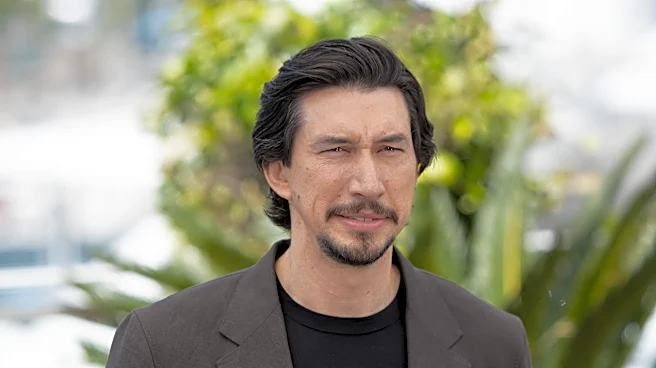
Actor Adam Driver has definitively stated that he is done playing Kylo Ren in the 'Star Wars' franchise, confirming that 'the ship has sailed' on any potential return. During an appearance on 'The Rich Eisen Show,' Driver revealed that a proposed standalone
film centered on his character, Ben Solo, which he had pitched with director Steven Soderbergh, was rejected by Disney executives Bob Iger and Alan Bergman. Despite Lucasfilm's initial interest and a developed script, the executives reportedly did not see how Ben Solo could be alive, effectively ending the project. Driver acknowledged the significant fan response to the dropped film, including billboards and planes flying banners over Disney studios, but reiterated that the decision was not his to make.
Why It's Important?
Adam Driver's confirmation of his departure from the 'Star Wars' franchise and the rejection of the Ben Solo spinoff film by Disney executives carries significant implications for the U.S. entertainment industry and its massive fan base. This decision highlights the immense power wielded by studio executives in shaping major franchises, even over the creative input of lead actors and acclaimed directors like Steven Soderbergh. For 'Star Wars' fans, it closes a chapter on a character with a complex arc and a dedicated following, potentially leading to disappointment. Economically, it signifies a missed opportunity for Disney to capitalize on a popular character and expand its cinematic universe, though the executives' reasoning suggests a strict adherence to established narrative continuity. This event underscores the tension between creative vision and corporate control in blockbuster filmmaking.
What's Next?
With Adam Driver's definitive statement, the 'Hunt for Ben Solo' project is officially off the table, and fans should not expect to see Kylo Ren return to the 'Star Wars' universe. This decision will likely lead to continued discussion among fans about the character's fate and the creative direction of the franchise. For Disney and Lucasfilm, it means focusing on other planned 'Star Wars' projects and characters, without the possibility of revisiting Ben Solo's story. The incident also serves as a case study in how major studios manage their intellectual property and make decisions about expanding their cinematic universes, often prioritizing overarching narrative consistency and corporate strategy over specific creative pitches, even from high-profile talent.
Beyond the Headlines
Adam Driver's candid revelation about the rejected Ben Solo film and his departure from 'Star Wars' delves into deeper implications concerning artistic control versus corporate ownership in the U.S. film industry. The fact that a compelling pitch from a lead actor and an acclaimed director was dismissed due to a perceived narrative inconsistency ('he's dead') highlights the rigid structures within major franchises. This situation raises questions about the creative freedom afforded to artists within large corporate ecosystems and whether commercial viability and established canon always trump innovative storytelling. The passionate fan response, including public demonstrations, also underscores the evolving relationship between creators, studios, and their audiences, where fans increasingly feel a sense of ownership over beloved characters and narratives, leading to potential friction when their expectations are not met by corporate decisions.