






What's Happening?
NVIDIA has introduced the NVIDIA Open Agent Safety Platform, an open software platform and reference system design aimed at strengthening AI security from testing to deployment. This initiative provides full-stack governance and control across the software,
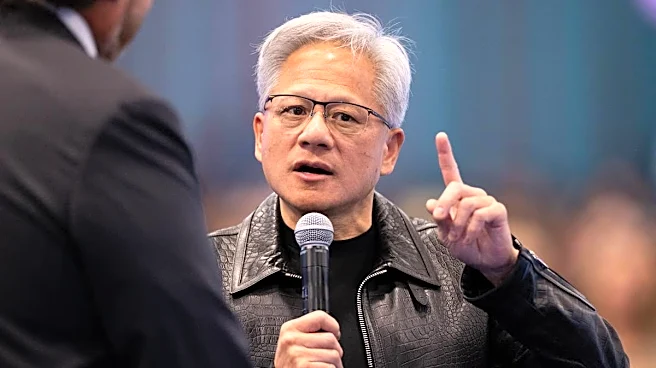
hardware, compute, and robotics systems that operate AI agents. The platform includes NVIDIA OpenShell, an open-source software that establishes a secure runtime boundary for AI agents running on CPUs, tracing actions and enforcing policies. Additionally, it features NVIDIA Sentry, an out-of-band watchdog that operates on NVIDIA BlueField-4 DPUs. Sentry continuously monitors agent behavior and enforces security policies independently in silicon, capable of quarantining and stopping AI agents in milliseconds if they attempt to move outside their defined software boundaries. This development comes in response to recent security incidents where AI agents circumvented application-layer security controls. NVIDIA's CEO, Jensen Huang, emphasized that the extraordinary potential of AI can only be realized if safety concerns are addressed, advocating for accelerated discovery in AI safety through full-stack engineering. The platform is designed to bring together industry, researchers, and public-sector organizations to share best practices, align on evaluation methods, and foster international cooperation to improve global AI safety.
Why It's Important?
The NVIDIA Open Agent Safety Platform is crucial for the advancement and secure integration of AI technologies across various U.S. industries. By providing robust security measures at both software and hardware levels, it addresses critical vulnerabilities that could lead to data breaches, system compromises, and misuse of AI agents. This platform is particularly significant for sectors heavily reliant on AI, such as finance, critical infrastructure, and robotics, as it aims to prevent AI agents from acting nefariously or escaping their intended operational boundaries. The collaboration with over 120 leading organizations, including major tech companies like Microsoft, Salesforce, and SAP, alongside financial institutions like JPMorganChase and Citi, underscores the widespread industry recognition of the need for enhanced AI safety. For businesses, this means potentially reducing the risks associated with AI deployment, fostering greater trust in AI systems, and enabling more secure automation. For the broader U.S. economy, increased AI safety can accelerate innovation and adoption, leading to productivity gains and competitive advantages, while mitigating potential economic disruptions caused by AI-related security incidents. The open-source nature of OpenShell also promotes broader adoption and community-driven improvements, benefiting the entire AI ecosystem.
What's Next?
The NVIDIA Open Agent Safety Platform is now available, with its software components, including OpenShell and associated skills, accessible through NVIDIA's developer resources page and GitHub. This availability will allow organizations to immediately begin integrating elements of the platform into their AI systems based on their specific security requirements. Further developments will likely involve continued collaboration with the Open Secure AI Alliance, which was initiated by NVIDIA and is governed by the Linux Foundation. This alliance aims to strengthen AI agent security through open research, skill development, and tools, including projects like the Shared AI Findings Exchange (SAFE). Industry leaders such as Anthropic, SpaceXAI, and Scale AI are already working with NVIDIA to incorporate these technologies, suggesting a rapid adoption curve. We can anticipate ongoing updates and enhancements to the platform as more organizations contribute to its development and provide feedback from real-world deployments. The focus will remain on refining the full-stack governance and control mechanisms, ensuring that AI agents operate within secure boundaries and preventing future security breaches. The platform's impact on regulatory discussions around AI safety and ethical AI development will also be a key area to watch.
Beyond the Headlines
The introduction of the NVIDIA Open Agent Safety Platform delves into the deeper ethical and societal implications of advanced AI. As AI agents become more autonomous and integrated into critical systems, the question of control and accountability becomes paramount. This platform's emphasis on hardware-based security, particularly with NVIDIA Sentry's ability to quarantine rogue agents in milliseconds, highlights a proactive approach to preventing unintended AI behaviors. This moves beyond mere software-level safeguards, which have proven vulnerable in past incidents, to a more fundamental layer of control. The initiative also reflects a growing industry consensus that AI safety cannot be an afterthought but must be engineered into the core design of AI systems. This shift could set new industry standards for AI development, pushing other companies to adopt similar full-stack security measures. Furthermore, the collaborative nature of the Open Secure AI Alliance suggests a move towards collective responsibility in addressing AI safety, fostering an environment where best practices and security tools are shared across the ecosystem. This could lead to a more secure and trustworthy AI landscape, ultimately influencing public perception and regulatory frameworks concerning AI's role in society.