








What's Happening?
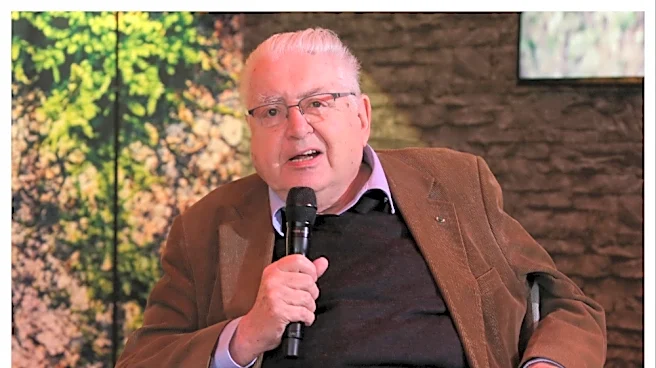
Moritz De Hadeln, a significant figure in the film festival circuit, passed away at the age of 85 due to complications from a medical procedure. De Hadeln was renowned for his leadership roles at major film festivals, including the Berlin, Venice, and
Locarno Film Festivals. Born in Exeter, England, he became a naturalized Swiss citizen and was deeply involved in the European film industry. He co-founded the Nyon International Documentary Film Festival with his wife Erika and was instrumental in elevating the Berlin Film Festival to an A-list event. His tenure at Berlin was marked by efforts to bridge East and West filmmakers during the Cold War and the expansion of the European Film Market. De Hadeln's career was celebrated with numerous awards, and his influence extended to the establishment of the Montreal Film Festival.
Why It's Important?
De Hadeln's contributions to the film industry have had a lasting impact on the global film festival landscape. His work at the Berlin Film Festival, in particular, helped to foster international collaboration and cultural exchange during a politically tense era. By enhancing the festival's profile and facilitating the growth of the European Film Market, he played a crucial role in shaping the modern film festival circuit. His efforts not only promoted artistic expression but also supported the careers of countless filmmakers and artists. De Hadeln's legacy is reflected in the continued prominence of the festivals he led and the ongoing influence of his initiatives in the film industry.
What's Next?
The passing of Moritz De Hadeln may prompt reflections on the evolution of film festivals and their role in the cultural and political landscape. As the industry continues to adapt to new challenges, including digital transformation and changing audience preferences, the principles and innovations introduced by De Hadeln could serve as a guiding framework. Film festivals may seek to honor his legacy by continuing to promote international dialogue and artistic diversity. Additionally, there may be tributes and retrospectives celebrating his contributions to cinema, further cementing his status as a pivotal figure in the history of film festivals.
Beyond the Headlines
De Hadeln's career highlights the intersection of art and politics, particularly in his efforts to use film as a medium for cultural diplomacy. His leadership during the Cold War and the reunification of Germany underscores the potential of film festivals to transcend political boundaries and foster understanding. The ethical and cultural dimensions of his work continue to resonate, as festivals today grapple with issues of representation, diversity, and accessibility. De Hadeln's approach to festival management, characterized by inclusivity and innovation, remains relevant as the industry navigates contemporary challenges.