



What's Happening?
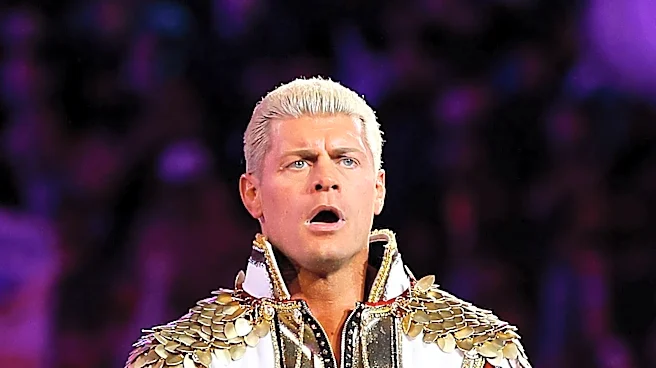
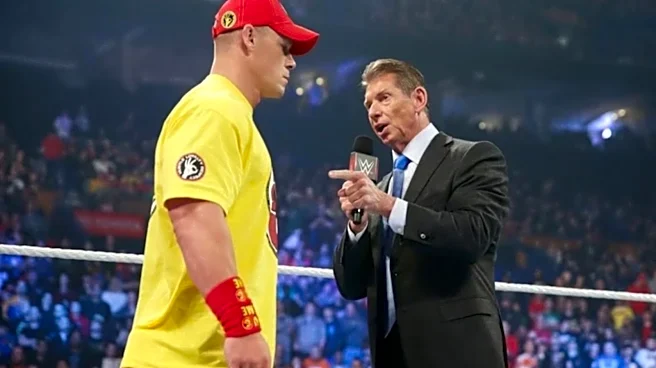
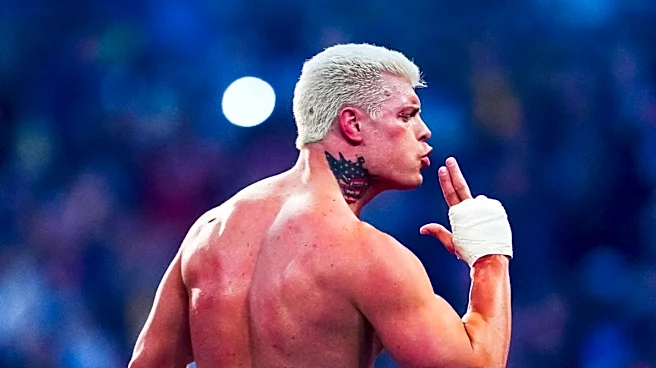
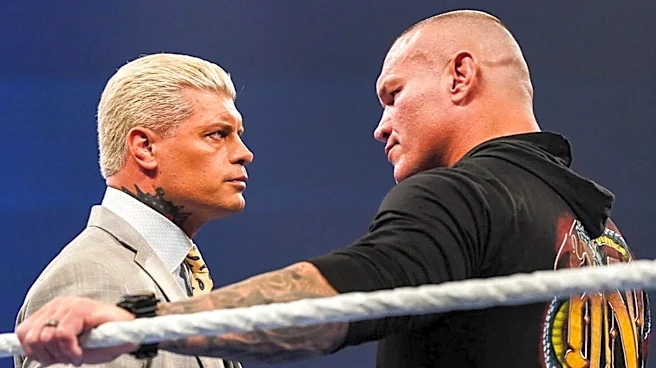
John Cena has offered advice to fellow WWE star Cody Rhodes, suggesting that Rhodes should focus on delivering 'good work' rather than being burdened by the 'QB1' moniker, which signifies being the face of the company. In an interview with 'Busted Open,'
Cena acknowledged Rhodes' rise to the top of the WWE card and his ambition to emulate Cena's past position. However, Cena emphasized that he views WWE as a team effort and that being the 'front person' is a byproduct of consistent good work, not a goal in itself. Cena drew from his own career experiences, noting that he didn't yearn to be the face of WWE and found joy and fulfillment in his craft by focusing on performance, even when not in the main event spotlight. He also mentioned CM Punk's past obsession with main-eventing WrestleMania as an example of how such a focus can become a weakness.
Why It's Important?
John Cena's counsel to Cody Rhodes carries significant weight due to Cena's own legendary status and long tenure as a top figure in WWE. His perspective highlights a philosophical approach to professional wrestling success, emphasizing intrinsic motivation and performance quality over external titles or expectations. This advice could influence how Rhodes perceives his role and career trajectory, potentially shaping his in-ring character development and public persona. For WWE, the guidance from a veteran like Cena underscores the company's culture, where mentorship and the passing of wisdom from one generation of stars to the next are valued. It also reflects on the pressures faced by top performers in a high-stakes entertainment industry, where maintaining authenticity and managing expectations are crucial for long-term success and fan engagement. The discussion also touches on the broader theme of leadership within a sports entertainment organization.
What's Next?
It remains to be seen how Cody Rhodes will internalize and apply John Cena's advice. Rhodes has openly expressed his ambition for the top spot, and Cena's perspective offers an alternative viewpoint on achieving and sustaining success. This conversation could subtly influence Rhodes' approach to his character, promos, and overall in-ring philosophy, potentially leading to a more focused and less outwardly pressured performance. The dynamic between established legends and rising stars is a constant in WWE, and this public exchange of advice adds another layer to the ongoing narrative of leadership and legacy within the company. Fans will likely observe Rhodes' future actions and statements through the lens of this advice, looking for shifts in his approach to being a top star.
Beyond the Headlines
Beyond the immediate implications for Cody Rhodes' career, Cena's comments delve into the psychological aspects of being a top performer in a demanding industry. His reflection on his own career, including his initial lack of passion for Hollywood that led to him being 'ran out' of the movie business, provides a candid look at the importance of genuine commitment and passion. This broader message extends beyond wrestling, offering insights into the universal challenges of managing ambition, pressure, and personal fulfillment in any high-profile career. The contrast between striving for a specific title ('QB1') and simply doing 'good work' highlights a fundamental tension between external validation and internal satisfaction, a theme relevant to many professional fields. Cena's evolution from 'The Face That Runs The Place' to advocating for a team-oriented approach also speaks to personal growth and a mature understanding of collective success.