






What's Happening?
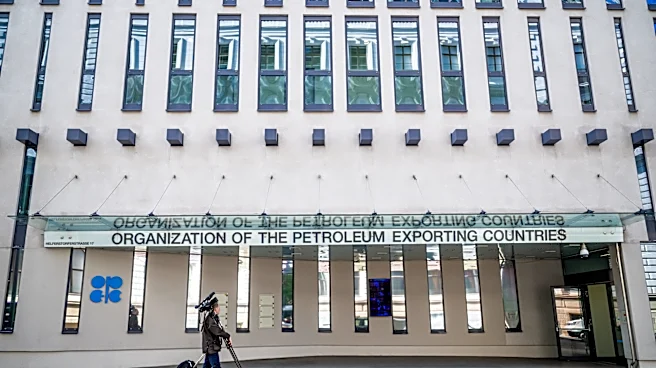
The average spot price for Iranian Heavy crude reached $104.87 per barrel in October 2026, according to the latest Monthly Oil Market Report from the Organization of the Petroleum Exporting Countries (OPEC). This figure represents a slight decrease of approximately
$1.00 per barrel compared to its price in September 2026. The report also indicated that the average price for Iranian Heavy crude throughout the year 2026 stood at $93.94 per barrel. This data provides a snapshot of the pricing trends for a specific grade of crude oil from a major OPEC producer, reflecting market conditions and demand for this particular type of petroleum. The monthly report from OPEC is a key publication that tracks various aspects of the global oil market, including prices, supply, and demand forecasts from its member countries.
Why It's Important?
The price of Iranian Heavy crude exceeding $104 per barrel in October 2026 has significant implications for the global oil market and, indirectly, for U.S. energy policy and consumer costs. While Iranian oil directly impacts global supply, its price movements contribute to the overall benchmark prices like Brent and WTI, which directly influence gasoline prices and energy costs in the United States. Higher crude oil prices can lead to increased operational expenses for U.S. industries reliant on petroleum products, such as transportation, manufacturing, and agriculture, potentially contributing to inflation. For U.S. policymakers, these price levels highlight the ongoing challenges in managing energy security and the impact of international oil markets on domestic economic stability. The slight month-over-month decrease in October, despite the high overall price, suggests minor market fluctuations but does not necessarily indicate a sustained downward trend, keeping the focus on global supply-demand dynamics and geopolitical factors that influence oil-producing nations.
What's Next?
Future prices for Iranian Heavy crude, and by extension global oil benchmarks, will likely be influenced by several factors. Geopolitical developments in the Middle East, particularly concerning Iran's oil production and export capabilities, will play a crucial role. Any changes in international sanctions or agreements could significantly impact supply. Global oil demand, influenced by economic growth rates in major consuming nations like China and India, will also be a key determinant. OPEC's upcoming production decisions and adherence to quotas by member states will further shape market supply. For the U.S., continued high oil prices could prompt discussions around strategic petroleum reserve releases or increased domestic production to mitigate consumer impact. Analysts will closely monitor OPEC's subsequent monthly reports for trends and forecasts that could signal shifts in the global oil market landscape, affecting energy costs and economic stability worldwide.
Beyond the Headlines
The consistent high pricing of Iranian Heavy crude, even with slight monthly fluctuations, underscores the persistent demand for various grades of oil in the global market and the complex interplay of supply, geopolitics, and economic factors. This situation highlights the strategic importance of Iran as a major oil producer, despite international sanctions and political tensions. The data also reflects the broader global energy landscape where different crude types cater to specific refinery needs, making each grade's price movement significant. For the U.S., while direct imports of Iranian oil are restricted, the global price of all crude types influences domestic energy costs and economic stability. This scenario also brings into focus the ongoing debate about energy independence versus global market integration, and how U.S. energy policy must navigate these interconnected realities. The sustained high prices could also accelerate investments in alternative energy sources and energy efficiency measures globally, as nations seek to reduce their vulnerability to volatile oil markets.