

What's Happening?
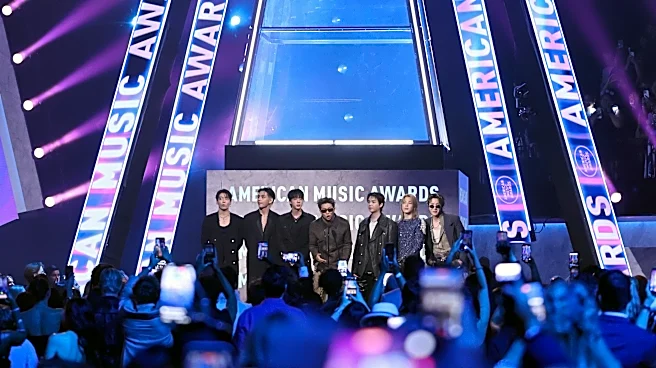
The first AI Music Awards ceremony was held in the U.S., celebrating artists who create songs at least partly with artificial intelligence. The event recognized AI-generated R&B artist Xania Monet with three top honors: AI Artist of the Year, AI Song
of the Year for 'How Was I Supposed to Know?', and AI Album of the Year. Telisha 'Nikki' Jones, who wrote the lyrics for Monet, used AI to set them to music. The Sonic Intelligence Academy (SIQA) organized the awards to promote AI music as a legitimate art form, classifying songs as fully AI-generated, AI-assisted, or human-and-AI hybrid. This initiative comes amidst ongoing criticism and lawsuits from major record labels and musicians who argue that AI-generated music infringes on copyrights and reduces opportunities for human creators, while proponents view AI as a tool that enables more people to create music.
Why It's Important?
The establishment of the AI Music Awards marks a significant step in the formal recognition and integration of artificial intelligence into the U.S. music industry. This event highlights the growing acceptance of AI as a creative tool, potentially paving the way for new genres, artistic expressions, and career paths within music. For artists and creators, it offers a platform to showcase their work and gain recognition in a rapidly evolving landscape. However, it also intensifies the existing tensions between traditional music stakeholders and the emerging AI music community. Record labels and human artists fear that the proliferation of AI-generated content, especially if trained on copyrighted material without consent, could dilute the market, reduce royalties, and diminish the value of human artistry. The awards, by legitimizing AI music, underscore the urgent need for clear legal frameworks and industry standards to address copyright, fair use, and compensation in the age of AI.
What's Next?
The success of the AI Music Awards and the recognition of AI artists like Xania Monet will likely encourage further development and adoption of AI tools in music creation. This could lead to more specialized AI music platforms, educational programs, and collaborative projects between human artists and AI. Concurrently, the legal battles over copyright infringement and the unauthorized use of intellectual property to train AI models are expected to escalate. The industry will need to grapple with defining what constitutes 'originality' and 'authorship' in AI-generated works. Discussions around establishing industry-wide guidelines for AI music, including transparent labeling, ethical data sourcing, and equitable royalty distribution, will become more critical. The ongoing debate will shape future legislation and industry practices, influencing how AI music is produced, distributed, and consumed in the U.S. and globally.
Beyond the Headlines
The emergence of awards specifically for AI music prompts a deeper societal reflection on the nature of creativity and the role of technology in artistic expression. It challenges the long-held belief that art is solely a product of human emotion and experience, suggesting that algorithms and data can also contribute to aesthetically pleasing and commercially successful works. This development could lead to a re-evaluation of artistic education, emphasizing skills in prompt engineering, AI model training, and human-AI collaboration. Furthermore, it raises questions about the authenticity of artistic identity when the 'artist' is an AI avatar, and the human input is primarily in lyric writing or conceptualization. The ethical implications of AI-generated content, particularly concerning the potential for deepfakes and the manipulation of artistic personas, will also become increasingly prominent, requiring careful consideration from both the industry and the public.