




What's Happening?
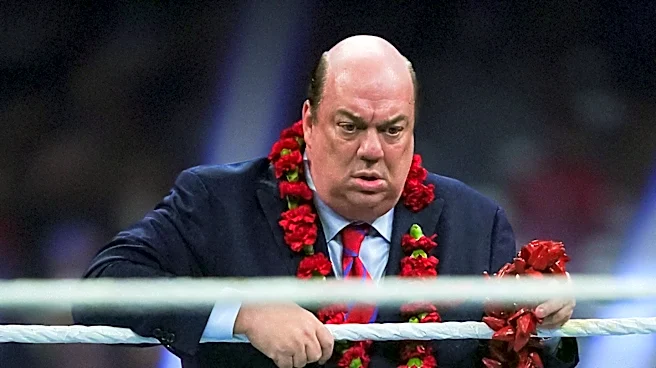
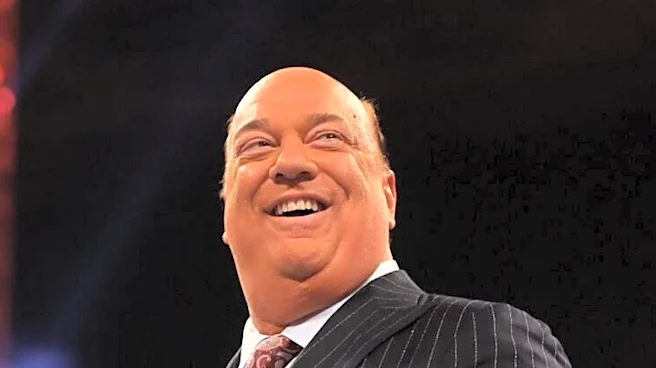
WWE Hall of Famer Paul Heyman has publicly discussed his personal views on marriage, stating that he will never get married. In an interview with Graham Bensinger, Heyman described marriage as a 'trap,' explaining that he believes it creates an obligatory
dynamic in a relationship due to a 'piece of paper.' He emphasized his desire for a partner to choose to be with him freely, rather than out of obligation. Heyman, known for his illustrious career in professional wrestling, clarified that his primary focus remains his professional pursuits and his children. He stated that he places himself third or fourth in his priorities, always putting his career and his children ahead of romantic relationships. Heyman also mentioned his son, Jacob, who is flourishing in the media industry with his talk show 'Roundtable,' for which Paul serves as executive producer.
Why It's Important?
Paul Heyman's candid remarks offer a unique perspective on personal life choices from a prominent figure in the U.S. entertainment industry. His decision to forgo marriage, rooted in a desire for genuine commitment over contractual obligation, reflects a growing trend among some individuals to redefine traditional relationship structures. This stance highlights the evolving societal views on marriage and partnership, particularly among those with demanding careers. For fans and observers of public figures, Heyman's explanation provides insight into the personal philosophies that can shape the lives of individuals in high-profile roles, demonstrating how career dedication and family priorities can influence significant life decisions. His emphasis on his children's well-being and his involvement in his son's career further underscores his commitment to family, albeit outside the conventional marital framework.
Beyond the Headlines
Heyman's philosophy on marriage, viewing it as a 'trap' that can lead to obligatory relationships, touches upon deeper societal discussions about the nature of commitment, freedom, and personal fulfillment. In a culture that often idealizes marriage, his perspective challenges conventional norms and invites reflection on whether legal contracts truly foster stronger bonds or, as he suggests, can inadvertently create a sense of entrapment. This viewpoint resonates with broader conversations about individual autonomy and the pursuit of personal and professional goals without conforming to traditional expectations. His prioritization of his career and children over a romantic partnership, while perhaps unconventional, illustrates a clear value system that many individuals, particularly those in demanding fields, might identify with. It prompts a re-evaluation of what constitutes a successful and fulfilling life, suggesting that traditional milestones like marriage are not universally desired or necessary for happiness and purpose.