



What's Happening?
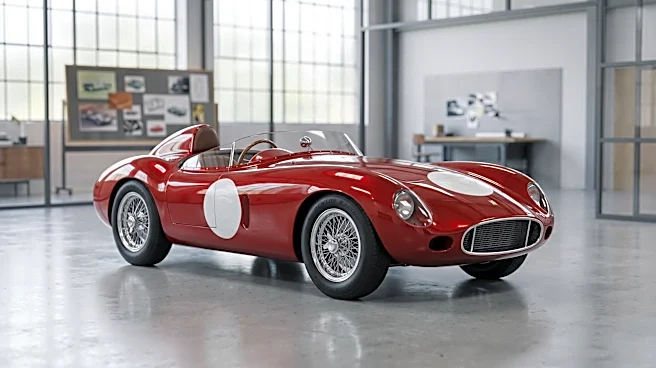
A 1956 Ferrari 500 TR, chassis 0654, is undergoing a meticulous hand-painting restoration to replicate its original livery from the 12 Hours of Reims race. The project involves artist Bailey Clayton, who specializes in hand-painted signage and vehicle
graphics. The car, which won the 2-liter class at Reims, is being returned to its historical appearance based on black and white photographs from the era. Clayton's process involves digitally mocking up the design, printing full-size patterns, and then applying the paint by hand without stencils or masks. This method aims to capture the authentic look and subtle imperfections of the original hand-painted race car graphics, contrasting with modern vinyl applications.
Why It's Important?
This restoration highlights a growing appreciation for historical accuracy and traditional craftsmanship in the classic car community. The use of hand-painting, as opposed to contemporary vinyl wraps, preserves the artistic and historical integrity of vintage race cars. This approach is significant for collectors and enthusiasts who value authenticity and the narrative behind a vehicle's appearance. It also underscores the skill and dedication required for such specialized restoration work, which is becoming increasingly rare. The decision to commit to a permanent, hand-painted livery reflects a deeper connection to the car's history, moving beyond temporary solutions often seen in modern racing or asset-driven ownership.
What's Next?
The completion of the Ferrari 500 TR's hand-painted livery will likely see the vehicle showcased at prestigious classic car events and races, such as the Rolex Reunion at Laguna Seca, where Clayton has previously performed finishing touches on other vehicles. This restoration could inspire other classic car owners and restorers to adopt similar traditional methods, further promoting the art of hand-painted vehicle graphics. The project also serves as a testament to the enduring legacy of Ferrari's racing history and the meticulous efforts involved in maintaining these iconic machines for future generations.
Beyond the Headlines
The practice of hand-painting classic race car liveries delves into the ethical and cultural dimensions of automotive preservation. It challenges the modern trend of quick, interchangeable vinyl graphics by emphasizing the human element and the unique character that imperfections bring. This approach fosters a deeper connection between the vehicle, its history, and the artisan, creating a tangible link to the past. It also raises questions about the definition of 'authenticity' in restoration and the value placed on traditional skills in an increasingly digital and automated world. The commitment to such a labor-intensive process reflects a philosophical stance on heritage and the enduring appeal of craftsmanship.