





What's Happening?
A tentative agreement between the U.S. and Iran to reopen the Strait of Hormuz has led to significant economic shifts, including a decrease in crude oil prices and a subsequent easing of inflation fears. This development has also impacted gold prices,
which are currently trading near $4,330 an ounce. The agreement aims to extend the ceasefire and lift the U.S. naval blockade, although it does not address Iran's nuclear program. The reopening of the Strait is expected to influence various markets, with Brent crude oil prices falling to $83.17 a barrel and U.S. Treasury yields decreasing slightly. The deal is seen as a de-escalation of geopolitical tensions, which has affected safe-haven demand for gold.
Why It's Important?
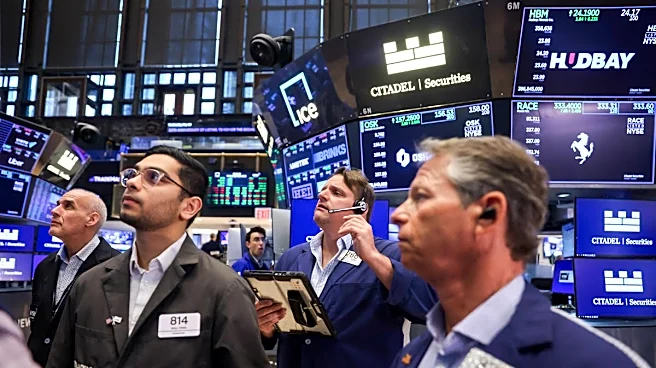
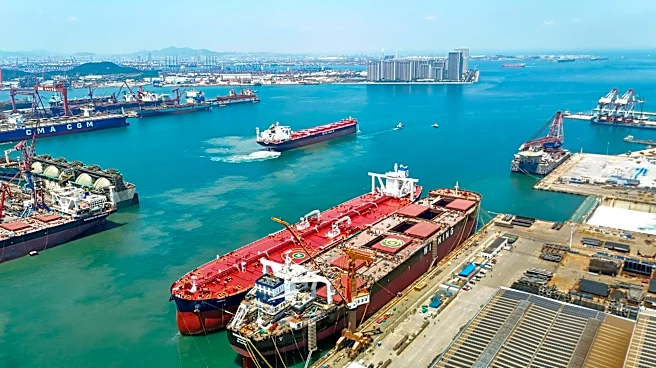
The reopening of the Strait of Hormuz is crucial as it is a major channel for global oil transportation. The reduction in oil prices alleviates inflationary pressures, which can influence central bank policies on interest rates. For the U.S. economy, lower oil prices can support corporate margins and consumer spending, potentially boosting economic growth. The agreement also affects the gold market by reducing the inflation shock that previously drove up yields against the metal. However, the geopolitical landscape remains uncertain, and the full normalization of Gulf oil flows is expected to take several months. The U.S. stock market has responded positively, with significant gains in major indices.
What's Next?
The tentative agreement between the U.S. and Iran is set to be followed by further negotiations over the next 60 days. These discussions will likely focus on broader geopolitical issues, including Iran's nuclear program. The outcome of these talks could have further implications for global oil supply and economic stability. Market participants will be closely monitoring these developments, as any changes could impact oil prices, inflation expectations, and interest rate policies. Additionally, the response from other geopolitical players and potential shifts in U.S. foreign policy will be critical in shaping future economic conditions.