



What's Happening?
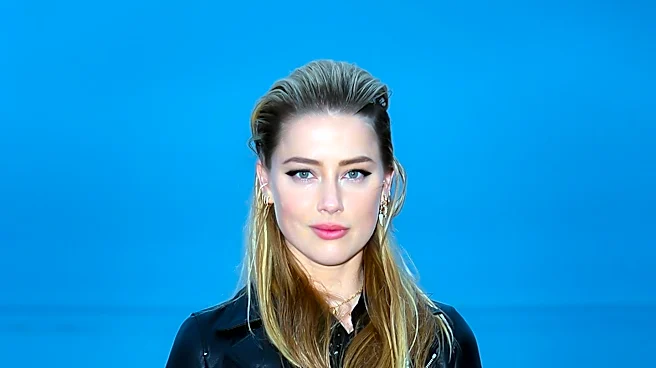
The film 'Aquaman and the Lost Kingdom' has notably diminished the role of Mera, played by Amber Heard, leading to a disjointed narrative and weakened emotional core, according to Paste Magazine. Despite Mera's integral role in the first 'Aquaman' film,
which was a billion-dollar box office success, her presence in the sequel is minimal. The movie attempts to establish Arthur Curry (Jason Momoa) as a new father, but largely omits Mera from this family dynamic, often placing her off-screen or giving her brief, underdeveloped appearances. Key emotional moments involving Mera, such as the kidnapping of her son, are depicted without close-ups or adequate reaction shots, focusing instead on other characters. This reduction in screen time and character development for Mera is seen as a deliberate effort to minimize Amber Heard's visibility in the film, following the highly publicized defamation trial involving her and her ex-husband, Johnny Depp.
Why It's Important?
The significant reduction of Mera's role in 'Aquaman and the Lost Kingdom' carries substantial implications for the film industry and public perception. It highlights the potential impact of public controversies on an actor's career, particularly for women, and raises questions about how studios respond to such situations. The article suggests that Warner Bros. and director James Wan's decision to sideline Mera, despite her narrative importance, has negatively affected the film's quality, undermining the central relationship that was crucial to the first movie's success. This situation could set a precedent for how studios handle actors involved in public disputes, potentially influencing casting decisions and character development in future productions. Furthermore, it underscores a broader societal issue regarding the treatment of women in the public eye, especially in the context of abuse allegations, and how institutions may appear to protect men while sidelining women.
What's Next?
The critical reception of 'Aquaman and the Lost Kingdom' and its handling of Mera's character may influence future decisions within Warner Bros. and the broader DC Universe. The article suggests that the film's perceived failure to deliver a compelling narrative, partly due to Mera's diminished role, could impact the direction of upcoming DC projects. It also raises the possibility of continued public discussion and advocacy, such as calls for a '#ReleaseTheMeraCut,' reflecting audience desire for a more complete portrayal of the character. The situation could prompt further scrutiny of studio practices regarding actor contracts and character integrity in the face of external controversies. The long-term impact on Amber Heard's career and the careers of other actors facing similar public challenges remains to be seen, as the industry navigates the complexities of public opinion and artistic integrity.
Beyond the Headlines
The controversy surrounding Mera's reduced role extends beyond typical film production issues, touching upon ethical and cultural dimensions. The article frames the situation as a 'publicly-supported hate campaign' against Amber Heard, suggesting that the studio's actions are complicit in a broader societal trend of tearing down women. This raises critical questions about accountability within Hollywood and the influence of social media narratives on creative decisions. The comparison to Ezra Miller's continued presence in 'The Flash' despite serious allegations against them further highlights a perceived double standard in how studios treat male and female actors involved in controversies. This incident could contribute to ongoing discussions about gender equality, due process, and the power dynamics within the entertainment industry, potentially influencing future policies on how studios manage talent and protect their creative vision amidst public pressure.