



What's Happening?
Mark Toney, Executive Director of The Utility Reform Network (TURN), has voiced significant concerns regarding PG&E's spending practices and their impact on customer utility bills. While acknowledging PG&E's improvements in wildfire safety, Toney criticizes
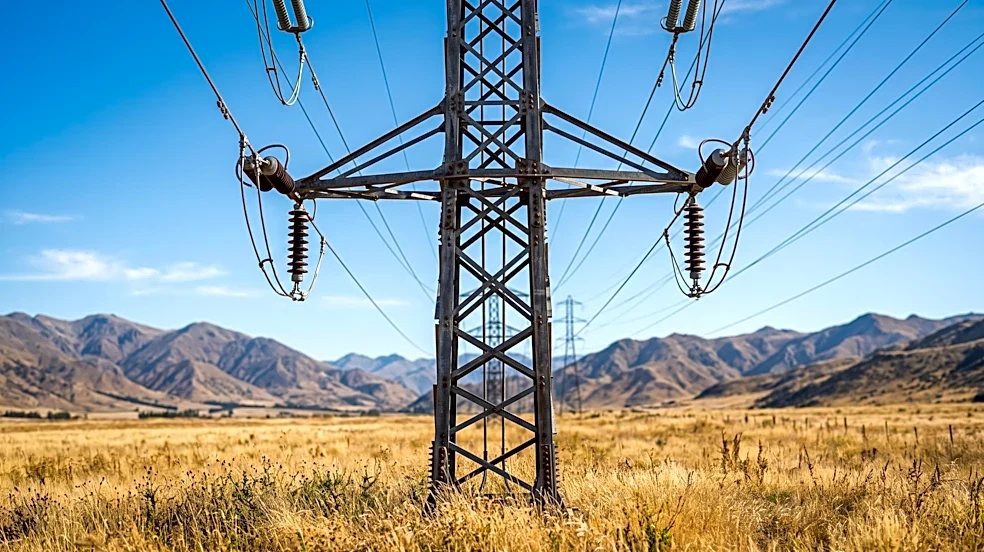
the utility's choice of expensive and slow methods for infrastructure hardening, specifically its plan to bury 10,000 miles of power lines. He argues that installing insulated poles and wires would be five times faster and one-fifth the cost. Toney also highlights that PG&E has approximately eight pending rate increase proposals before the state Public Utilities Commission, which could further burden customers. He points out that despite PG&E's claims of lowering monthly bills, the rate of increase has only slowed, and customers are still paying for billions in overspending from previous years, particularly in vegetation management. Toney asserts that overall, customers are worse off since PG&E emerged from bankruptcy, as the company left with $40 billion in debt, with ratepayers on the hook for $10 billion of that amount.
Why It's Important?
The ongoing debate over PG&E's infrastructure spending and its impact on customer bills is critical for California's economy and its residents. High utility costs can strain household budgets, particularly for low-income ratepayers, and can also force small businesses and restaurants to close. Toney's advocacy for more affordable power and utility accountability underscores the broader economic implications of PG&E's operational decisions. The choice between expensive undergrounding and more cost-effective insulated overhead lines has significant financial consequences for both the utility and its customers. Furthermore, the potential for increased power-sector emissions due to reliance on coal plants in Europe, as mentioned in a related context, highlights the global interconnectedness of energy markets and the challenges of transitioning to cleaner energy sources while maintaining affordability and reliability. The situation in California with PG&E reflects a microcosm of these larger energy policy and economic challenges.
What's Next?
PG&E's pending rate increase proposals before the state Public Utilities Commission will be a key area of focus, as their approval could lead to further increases in customer bills. The utility's decision to cut capital spending, including delays for electrical connections for new homes, renewable-energy projects, and data centers, will likely face continued scrutiny from consumer advocates and potentially impact California's development and housing initiatives. Toney suggests that PG&E could achieve significant savings by shifting from undergrounding power lines at $4 million per mile to insulated overhead lines at $800,000 per mile, a proposal that could be a point of contention in future regulatory discussions. The ongoing efforts by TURN to build a broad coalition for affordable power and utility accountability indicate that advocacy for ratepayers will continue to be a significant factor in shaping PG&E's future policies and spending decisions.
Beyond the Headlines
The challenges faced by PG&E and its customers extend beyond immediate financial concerns, touching upon fundamental issues of corporate responsibility, regulatory oversight, and the equitable distribution of costs associated with essential services. The criticism of PG&E's spending choices, particularly the preference for more expensive infrastructure hardening methods, raises questions about the balance between safety, cost-effectiveness, and long-term sustainability. The potential for another PG&E bankruptcy, and the implications of ratepayers being responsible for a significant portion of the company's debt, highlight systemic vulnerabilities in the utility sector. This situation also underscores the ethical dimension of how essential services are priced and delivered, and the role of consumer advocacy in holding powerful corporations accountable. The broader context of energy market interconnectedness, as seen in Europe's reliance on coal due to gas prices, suggests that these issues are not isolated but are part of a global energy transition with complex economic and environmental trade-offs.