


What's Happening?
TikTok is functioning as a 'music time machine,' consistently bringing back older songs and artists into mainstream popularity, alongside promoting new music. The platform's format, which encourages dance challenges and short video clips, has led to the
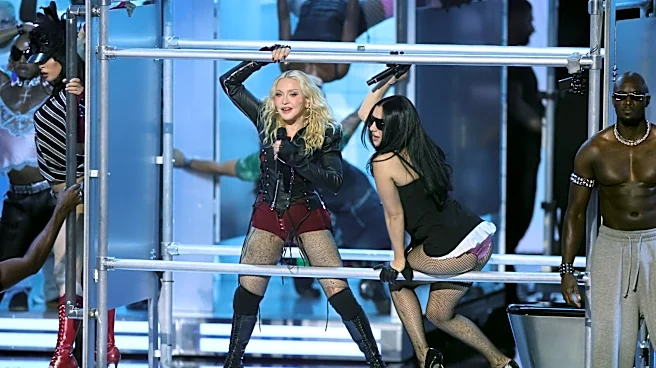
resurgence of hits from various decades, including the 80s, 90s, and 2000s. For instance, Madonna's 'Hung Up' became a dance trend in 2024, and Kate Bush's 'Running Up That Hill' topped charts in 2022 after being featured in 'Stranger Things.' This phenomenon is not new, as platforms like Tumblr previously revived styles and music from the 90s, with artists like Lana del Rey and Arctic Monkeys drawing inspiration from older eras. TikTok continues this trend, making music accessible and fostering a sense of nostalgia, even for relatively recent cultural phenomena like the 'sad girl aesthetic' and grunge styles from the early 2010s.
Why It's Important?
The 'music time machine' effect of TikTok has significant implications for the music industry and cultural consumption. It demonstrates the platform's power to extend the commercial lifespan of songs, providing new revenue streams for artists and rights holders of older music. This trend also influences contemporary music production, as artists and producers may consciously create music with 'TikTok-able' moments or draw inspiration from past eras that resonate with current audiences. For listeners, it broadens musical horizons, exposing younger generations to classic tracks they might not otherwise discover, and allowing older generations to revisit beloved songs. This constant cycle of rediscovery and reinterpretation fosters a rich and diverse musical landscape, blurring the lines between 'old' and 'new' music. It also highlights how social media platforms are becoming primary arbiters of cultural relevance, shaping collective memory and taste in real-time.
What's Next?
As TikTok continues to evolve, its role as a cultural curator is likely to strengthen. We can anticipate a continued pattern of older songs experiencing renewed popularity, driven by new trends, challenges, or placements in popular media. This will likely lead to more strategic efforts by record labels and artists to leverage TikTok's nostalgic power, perhaps by re-releasing older tracks or creating content that intentionally taps into past aesthetics. The platform's influence may also encourage a more cyclical view of cultural trends, where styles and sounds from previous decades are constantly re-evaluated and integrated into contemporary culture. Furthermore, the success of 'retro' trends on TikTok could inspire other social media platforms to develop similar features or content strategies that capitalize on nostalgia and cultural rediscovery, further embedding this 'time machine' effect into the digital landscape.
Beyond the Headlines
The phenomenon of TikTok acting as a 'music time machine' delves into deeper societal and psychological aspects of nostalgia and cultural memory. In a rapidly changing world, the comfort of revisiting past cultural touchstones provides a sense of stability and connection. This isn't just about music; it's about a broader cultural longing for 'the good old times,' even if those times are relatively recent. The platform's ability to make even a decade-old aesthetic feel 'nostalgic' suggests an accelerated pace of cultural turnover, where trends become 'retro' much faster than in previous eras. This raises questions about how digital platforms are compressing our perception of time and history. It also highlights the commercialization of nostalgia, where human emotions and cultural memories are packaged and sold as products. Ultimately, TikTok's 'music time machine' reflects a complex interplay between technology, memory, and the continuous human desire to connect with the past while shaping the present.