





What's Happening?
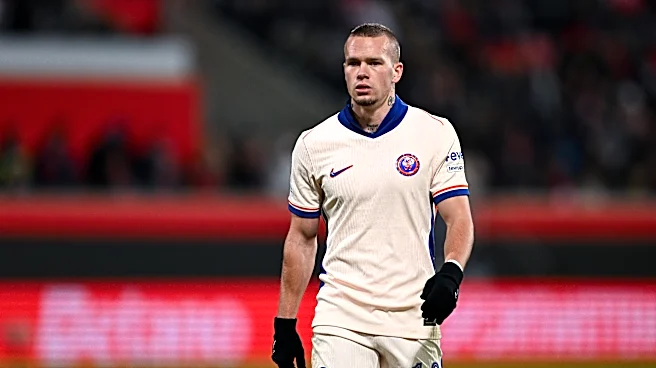
Chelsea winger Mykhailo Mudryk has been cleared to return to football after serving nearly two years of a four-year doping ban. The ban was initially imposed following a positive test for meldonium, a substance banned by the World Anti-Doping Agency (WADA)
since 2016. Although not a performance enhancer, meldonium can improve endurance and recovery. Mudryk maintained his innocence, claiming he never knowingly used banned substances. The ban was reduced after a review of WADA's technical documents, which now consider the concentration of meldonium found in Mudryk's sample as non-violative. Despite this, Mudryk accepted the original anti-doping rule violations and agreed to a suspension equal to the time already served.
Why It's Important?
Mudryk's case highlights the complexities of anti-doping regulations and the impact of evolving scientific standards on athletes' careers. The reduction of his ban underscores the importance of accurate and fair assessments in doping cases, which can significantly affect an athlete's professional trajectory. For Chelsea, Mudryk's return could bolster their squad, although his absence has led to changes in team dynamics, such as the reassignment of his No. 10 jersey. This situation also reflects the broader challenges sports organizations face in balancing strict anti-doping measures with fair treatment of athletes.
What's Next?
Mudryk's immediate focus will be on regaining match fitness and reintegrating into Chelsea's squad. Given his prolonged absence, he will need time to adjust and prove his readiness for competitive play. Chelsea's management will have to decide on his role within the team, considering recent signings and tactical adjustments made during his suspension. Additionally, Mudryk's case may prompt further discussions within sports governing bodies about the application and interpretation of anti-doping regulations, potentially influencing future policy changes.