










What's Happening?
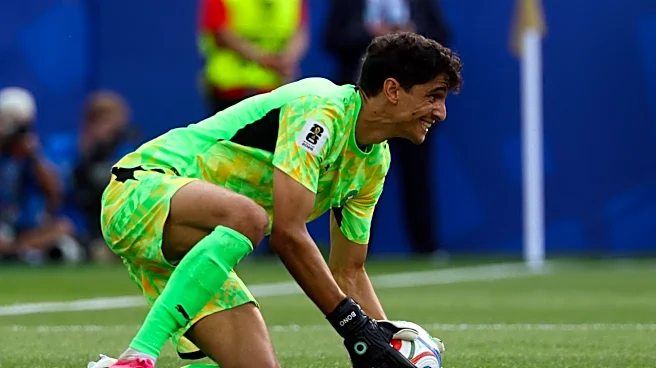
Cape Verde, a small island nation off the western coast of Africa, has gained international recognition following its national soccer team's performance in the 2026 World Cup. The team, known as the Blue Sharks, made a significant impact by tying with
Spain and nearly defeating Argentina in the knockout stages. This achievement marks Cape Verde's first appearance in the World Cup, making them the smallest nation by population to reach the tournament's knockout stages. Belmiro Barros III, a bartender in Chicago with Cape Verdean roots, expressed pride in his heritage and the team's accomplishments. His grandfather, who immigrated to the United States, instilled in him the importance of preserving their cultural identity. The team's performance has brought attention to Cape Verde, fulfilling a long-held dream of Barros' grandfather to see their homeland recognized globally.
Why It's Important?
Cape Verde's unexpected success in the World Cup has significant implications for the nation's global image and cultural pride. The team's performance has not only put Cape Verde on the map for many who were previously unaware of the nation but also fostered a sense of unity and pride among Cape Verdeans worldwide. This newfound recognition could lead to increased interest in the country's culture, tourism, and potential investment opportunities. For the diaspora, particularly those in the United States, the team's achievements serve as a powerful reminder of their roots and the resilience of their people. The story of Cape Verde's World Cup journey highlights the broader impact of sports in bridging cultural gaps and fostering international camaraderie.
What's Next?
Following their World Cup performance, Cape Verde may experience increased interest in its soccer program, potentially attracting more resources and talent development opportunities. The global attention could also lead to enhanced diplomatic and economic relations with other countries, as well as a boost in tourism. For the Cape Verdean community in the U.S. and elsewhere, this moment presents an opportunity to further celebrate and promote their cultural heritage. The nation's soccer federation might focus on building on this success to ensure future participation in international tournaments, which could further elevate Cape Verde's status on the world stage.
Beyond the Headlines
The success of Cape Verde's soccer team in the World Cup underscores the power of sports as a unifying force and a platform for smaller nations to gain international recognition. It also highlights the role of the diaspora in maintaining cultural ties and promoting national pride. The story of Belmiro Barros and his family's journey from Cape Verde to the United States exemplifies the immigrant experience and the enduring connection to one's homeland. This event may inspire other small nations to invest in sports as a means of achieving global visibility and fostering national pride.