
What's Happening?
NANO Nuclear Energy, a U.S.-based nuclear technology company, has entered into a non-binding commercial framework agreement with Tillman Global Holdings. This partnership aims to explore the deployment
of advanced nuclear reactors to power large AI data center developments across the United States. The companies are targeting the installation of at least 2 gigawatts (GW) of advanced nuclear capacity by the mid-2030s, with plans to expand to 6 GW or more by 2040. This initiative is driven by the increasing electricity demands of AI workloads, which are pushing data centers to require substantial and continuous power supplies. The framework positions NANO Nuclear as Tillman's anticipated preferred nuclear technology provider for its planned AI industrial zones. Tillman is actively developing a multi-state pipeline of sites specifically designed to meet the high power requirements of hyperscale and AI customers. The collaboration will involve evaluating potential sites, addressing licensing requirements, assessing customer demand, and securing project financing as individual developments progress. The broader strategy is to integrate nuclear generation alongside other power sources to support the expanding data center campuses, providing a reliable and steady power supply.
Why It's Important?
This collaboration is significant for the U.S. technology and energy sectors, as it directly addresses the escalating power demands of artificial intelligence infrastructure. The need for dedicated and reliable power is becoming a critical constraint on the continued expansion of AI, and nuclear energy offers a solution for continuous, baseload electricity generation. By deploying advanced nuclear reactors, the partnership aims to reduce reliance on single sources of grid electricity and provide a stable power supply for data centers that must operate without interruption. This move could accelerate the development of AI capabilities within the U.S. by ensuring the necessary energy infrastructure is in place. For NANO Nuclear Energy, this framework represents a major step in its customer acquisition strategy, leveraging Tillman's expertise in digital and energy infrastructure development, access to capital, and relationships within the technology ecosystem. The proposed model also allows for Tillman or its affiliates to own and finance qualifying power projects, while NANO Nuclear provides the reactor technology, fuel, and operational support. This could set a precedent for how future large-scale AI and data center projects are powered, potentially influencing energy policy and investment in advanced nuclear technologies across the nation.
What's Next?
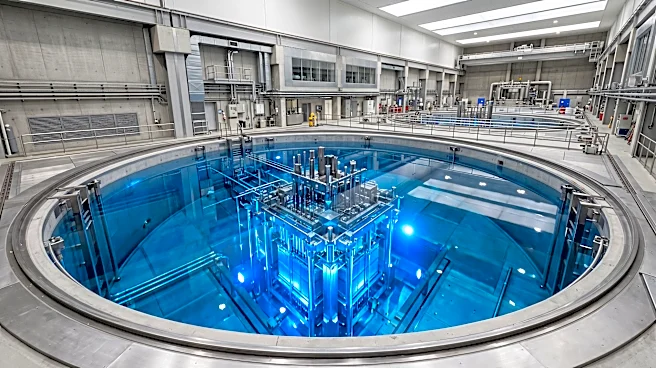
The immediate next steps for NANO Nuclear Energy and Tillman Global Holdings involve evaluating potential sites, navigating licensing requirements, and securing customer commitments and financing. The companies plan to begin deploying at least 2 GW of advanced nuclear capacity by the mid-2030s, with a long-term goal of reaching 6 GW or more by 2040. This phased deployment approach, utilizing NANO Nuclear’s KRONOS MMR Energy System, a 15-megawatt high-temperature gas-cooled reactor, is designed to allow nuclear capacity to be added incrementally as electricity demand grows. The framework also includes a milestone-based equity arrangement, where Tillman could receive warrants to purchase NANO Nuclear stock, tied to future reactor purchase commitments and project development milestones. Additionally, a proposed initial restricted stock grant to Tillman is subject to further milestones. The terms remain subject to definitive agreements, indicating that detailed planning and regulatory approvals are crucial steps before construction can commence. The companies are also exploring potential projects in selected international markets where Tillman has digital infrastructure interests, suggesting a broader global impact for this energy solution.
Beyond the Headlines
This initiative highlights a deeper trend in the U.S. energy landscape: the re-evaluation and integration of nuclear power as a critical component for future technological advancements. The immense and continuous power requirements of AI data centers are pushing the boundaries of traditional energy grids, making reliable, carbon-free baseload power sources like nuclear energy increasingly attractive. This partnership could catalyze broader acceptance and investment in advanced nuclear technologies, including small modular reactors (SMRs), which offer modularity and scalability suitable for industrial applications. The ethical implications revolve around ensuring the safe and secure operation of these nuclear facilities, managing radioactive waste, and addressing public perception of nuclear energy. Legally, the project will navigate complex regulatory frameworks from the U.S. Nuclear Regulatory Commission, potentially influencing future licensing processes for advanced reactors. Culturally, this could shift the narrative around nuclear power from a legacy energy source to a cutting-edge solution for high-tech industries, fostering innovation and economic growth in regions hosting these AI industrial zones. The long-term shift could see a more decentralized and resilient energy infrastructure, with dedicated power sources for critical digital infrastructure, reducing vulnerability to grid fluctuations and enhancing national energy security.