






What's Happening?
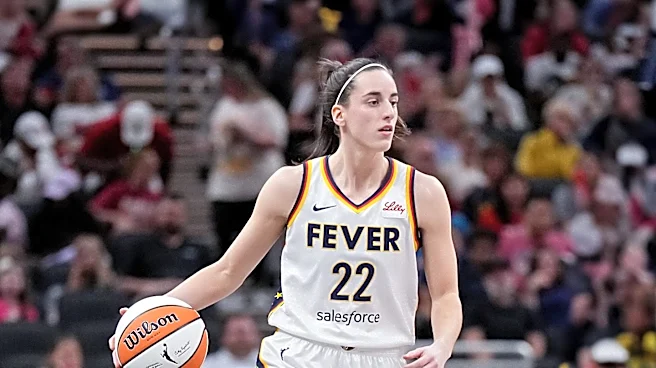
WNBA Hall of Famer Nancy Lieberman has highlighted the significant impact Caitlin Clark has had on the WNBA's viewership and revenue, while also noting a perceived lack of credit for Clark's contributions. Lieberman stated on the 'All The Smoke' podcast
that Clark's presence, along with Angel Reese, has been instrumental in the league's recent surge in popularity. This season, nine regular-season games drew over two million viewers, a stark contrast to the period before Clark's 2024 entry when WNBA games rarely reached one million viewers. Clark's rookie season saw a 170% increase in ESPN's average audience for WNBA games, reaching 1.2 million viewers. Despite her record-breaking individual performance, including being the first WNBA player to record over 800 points and 300 assists in a single season, Clark finished fourth in MVP voting with only one first-place vote, leading Lieberman to suggest 'jealousy and envy' as factors.
Why It's Important?
Caitlin Clark's influence on the WNBA's commercial success is undeniable, driving unprecedented viewership and social media engagement. This 'Caitlin Clark effect' has translated into substantial financial growth for the league, with women's sports projected to generate at least $3 billion in global revenue this year, up from less than $1 billion in 2023. This surge benefits all players through improved collective bargaining agreements and increased salaries. However, the debate surrounding her recognition, particularly in MVP voting, underscores underlying tensions within the league regarding established players versus new stars. Fair acknowledgment of her commercial and on-court impact is crucial for maintaining morale and ensuring continued growth, as it validates the value she brings to the sport and its ecosystem.
What's Next?
The discussion around Caitlin Clark's impact and recognition is likely to continue, especially as the WNBA season progresses and new awards are considered. The league and its teams will need to navigate the balance between celebrating established stars and acknowledging the transformative influence of new talents like Clark. Continued efforts to promote the league's growth, driven in part by Clark's popularity, will be essential. This includes strategic marketing, broadcast deals, and fan engagement initiatives. The ongoing evolution of women's sports, fueled by increased interest and investment, will also shape how athletes like Clark are perceived and rewarded in the future.
Beyond the Headlines
The 'jealousy and envy' narrative surrounding Caitlin Clark's recognition points to broader societal dynamics within competitive environments, particularly in women's sports. It highlights the challenges of integrating new, highly popular figures into existing structures and the potential for friction when traditional hierarchies are disrupted. This situation also reflects the complex interplay between individual achievement, team success, and commercial value in professional sports. The WNBA's ability to harness Clark's popularity while fostering a supportive and equitable environment for all its athletes will be critical for its long-term success and for setting a precedent for how women's sports leagues manage rapid growth and evolving star power.