



What's Happening?
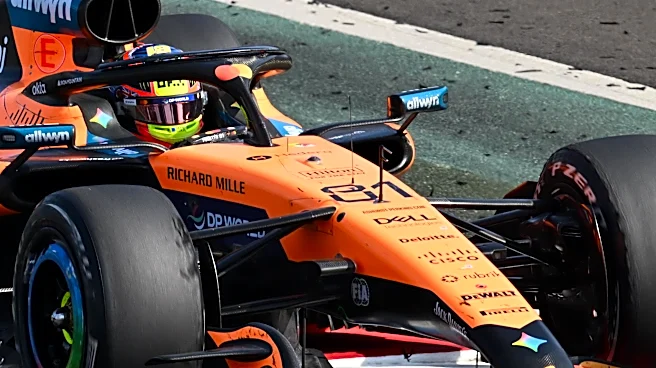
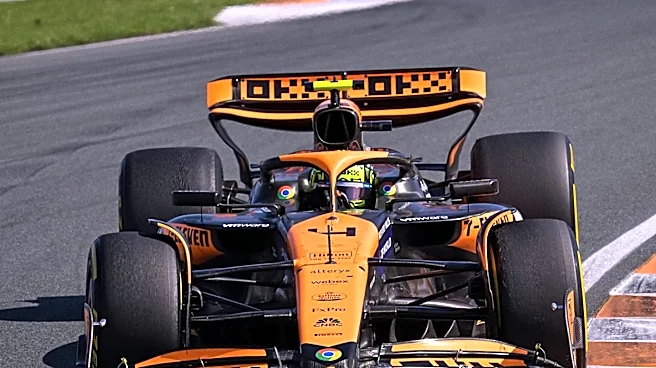
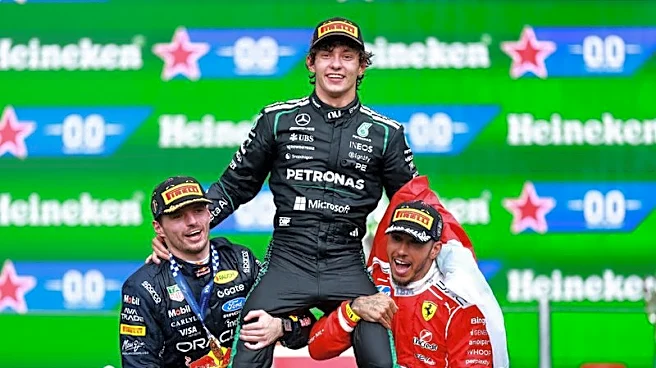
McLaren Formula 1 driver Lando Norris has voiced strong criticism regarding the current top speed limiters in F1 cars, arguing that these technical regulations negatively impact the quality of racing. During the Mexico City Grand Prix, Norris expressed
frustration that the artificial ceiling on battery deployment prevents effective late-braking overtakes and straight-line passes, especially when cars are evenly matched. He highlighted that the limiter, which stops cars from exceeding a certain speed, nullifies any advantage gained from being slightly faster or closer to a competitor, thereby 'ruining racing.' Norris pointed out that motorbikes achieve speeds of 370 km/h without seatbelts, suggesting F1 cars should easily surpass such speeds. He believes this issue is a simple software fix, emphasizing that future engine rule tweaks or active aerodynamics, like the low-drag 'Straight Mode' planned for 2026, will not resolve the problem as long as the hard limit remains in place. Despite his critique of the regulations, Norris acknowledged McLaren's own performance shortcomings, stating that their 'poor Saturday' was ultimately to blame for not achieving a podium finish in Mexico, as significant raw pace is required to overtake under current conditions.
Why It's Important?
Lando Norris's critique of Formula 1's top speed limiters highlights a significant debate within motorsport regarding the balance between technological advancement, safety, and the spectacle of racing. His comments underscore a growing concern among drivers and fans that current regulations may be inadvertently hindering competitive on-track action. If F1 cars are artificially restricted from reaching their full potential, it could diminish the thrill of high-speed overtakes and strategic racing, potentially impacting fan engagement and the sport's appeal. The comparison to motorbikes, which achieve higher speeds with fewer safety restraints, challenges the perceived necessity of such strict limitations in F1. This discussion could prompt the governing body, the FIA, to re-evaluate technical regulations, particularly as the sport looks towards new aerodynamic rules in 2026. A shift in these rules could lead to more dynamic races, increasing viewership and commercial interest, but also raises questions about the engineering challenges and safety implications of higher speeds. The outcome of this debate could influence future car design, driver strategies, and the overall direction of Formula 1 as a global sport.
What's Next?
Lando Norris's call for changes to F1's top speed limiters is likely to fuel further discussion within the Formula 1 paddock and among the sport's governing bodies. While immediate changes are unlikely, his comments could prompt the FIA and F1 technical working groups to review the impact of current regulations on racing dynamics. As the sport prepares for significant rule changes in 2026, which include active aerodynamics and new power unit regulations, the feedback from prominent drivers like Norris may influence how these rules are implemented and refined. Teams and engineers might be tasked with exploring solutions that allow for higher top speeds while maintaining safety standards. Additionally, other drivers may echo Norris's sentiments, creating a collective voice that could pressure the FIA to consider adjustments. The ongoing dialogue between drivers, teams, and regulators will be crucial in determining whether F1 moves towards a future with fewer artificial speed restrictions, potentially leading to more exhilarating racing and a re-evaluation of the sport's performance benchmarks.
Beyond the Headlines
The debate over F1's top speed limiters extends beyond mere performance metrics, touching upon the philosophical core of Formula 1 as the pinnacle of motorsport. If the most technologically advanced racing cars in the world are artificially constrained below their potential, it raises questions about the sport's commitment to innovation and pushing boundaries. This situation could lead to a perception that F1 is prioritizing control and homogenization over raw speed and driver skill, potentially alienating purist fans who value extreme performance. Ethically, the argument that motorbikes achieve higher speeds with less protection challenges the rationale behind F1's current limitations, prompting a re-evaluation of what constitutes 'safe' versus 'exciting' in high-speed racing. Long-term, if these restrictions persist, it could stifle engineering creativity and lead to a more homogenized racing product, where the unique characteristics and performance advantages of different car designs are minimized. This could fundamentally alter the competitive landscape and the very essence of what makes Formula 1 a compelling spectacle of speed and engineering prowess.