






What's Happening?
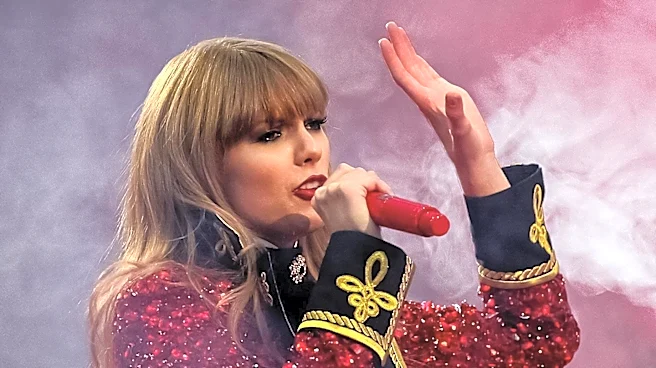
A federal judge in Florida has dismissed a lawsuit filed by self-published poet Kimberly Marasco against Taylor Swift. Marasco alleged that Swift's songs, including 'The Man' and 'The Great War,' infringed on her poems by using similar themes and metaphors.
The lawsuit also named music producer Jack Antonoff, Republic Records, Universal Music Group, and musician Aaron Dessner as defendants. Judge Aileen Cannon ruled that the themes and concepts in question are not protected by copyright law, as they are considered 'quintessential themes, concepts, and isolated words.' The judge granted Swift's motion to dismiss, stating that Marasco's poems do not contain protectable expression and that the plaintiff failed to plausibly plead copying. This ruling follows a previous dismissal of a similar lawsuit by Marasco in September 2025.
Why It's Important?
The dismissal of this lawsuit underscores the challenges artists face in protecting their creative works under copyright law, particularly when it comes to common themes and metaphors. The ruling highlights the legal boundaries of copyright protection, which does not extend to basic ideas or short phrases. This case is significant for the music industry, as it reaffirms the limitations of copyright claims based on thematic similarities. It also serves as a precedent for future cases where artists may claim infringement based on non-specific elements of creative works. The decision may impact how artists and their legal teams approach the creation and protection of their intellectual property.
What's Next?
Following the dismissal, Kimberly Marasco has filed an appeal, indicating that the legal battle may continue. The outcome of the appeal could further clarify the scope of copyright protection for creative works, particularly in the music industry. If the appeal is successful, it may lead to a reevaluation of what constitutes protectable expression under copyright law. The case will be closely watched by artists, legal experts, and industry stakeholders, as it could influence future copyright litigation and the protection of creative content.