





What's Happening?
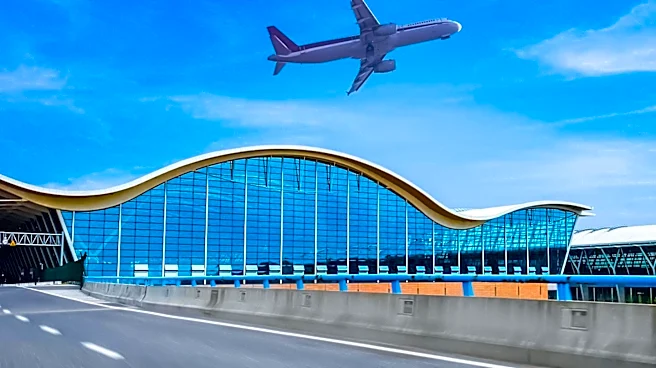
Heathrow Airport has lost its status as Europe's busiest airport to Istanbul, prompting calls for expansion. In July, Heathrow reported 7.9 million passengers, a decrease from the previous year, while Istanbul saw 8.15 million. Heathrow's CEO, Thomas
Woldbye, emphasized the need for a third runway to maintain the UK's competitive edge in global air travel. The proposed £33 billion expansion aims to accommodate 150 million passengers annually. The airport argues that expansion is crucial for economic growth and maintaining its status as a leading hub. However, the expansion faces criticism for potential environmental and regional economic impacts.
Why It's Important?
The expansion of Heathrow is significant for the UK's economy and its position in global aviation. As a major hub, Heathrow's ability to handle more passengers could enhance trade, tourism, and investment. However, the expansion raises concerns about environmental impacts and regional economic disparities. Critics argue that infrastructure investment should be distributed more evenly across the UK. The decision to expand will affect various stakeholders, including airlines, local communities, and environmental groups. The outcome could influence the UK's transportation policy and its commitment to reducing carbon emissions.
What's Next?
The UK government is currently consulting on the expansion plans, with a decision expected in the coming years. If approved, construction could begin within the current parliamentary term, with completion aimed for 2035. The expansion will likely face legal and political challenges, particularly from environmental groups and regional leaders. The debate will continue to focus on balancing economic benefits with environmental and social costs. Stakeholders will closely monitor the government's decision, which will have long-term implications for the UK's aviation industry and regional development.