
What's Happening?
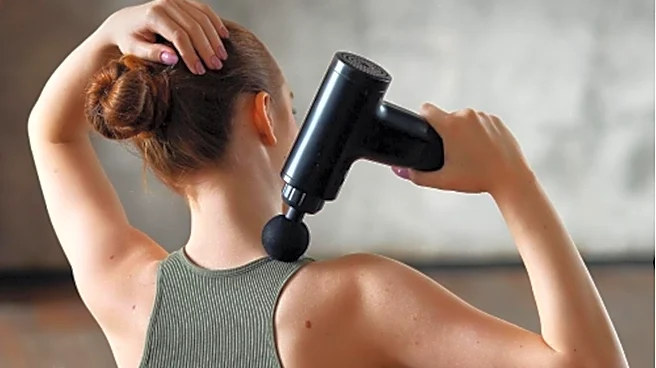
Massage guns provide a convenient option for self-care, offering deep tissue massage, muscle recovery, pain relief, relaxation, and sports recovery. These portable, cordless devices utilize repeated mechanical
percussion through various attachments and offer adjustable intensity levels. While they are a popular tool for post-activity comfort, research on their effectiveness presents a nuanced picture. A 2023 systematic review of 11 studies indicated potential short-term benefits for range-of-motion and flexibility. However, the same review found that findings for strength and explosive performance were not consistently positive, and there is limited information regarding longer-term effects and optimal application parameters. A 2026 meta-analysis of 12 randomized trials also found low-certainty evidence for improved countermovement-jump recovery but no clear benefit for maximum-strength recovery or soreness. It is important to note that massage guns are not equivalent to hands-on sports massage, as manual techniques can be adapted by a provider in response to individual needs and feedback, unlike the fixed mechanical percussion of a device.
Why It's Important?
The increasing popularity of massage guns highlights a growing trend in self-care and at-home recovery solutions within the U.S. sports and fitness industries. For consumers, these devices offer an accessible and convenient way to address muscle soreness and improve flexibility without requiring professional appointments. This can lead to cost savings and greater autonomy in managing post-exercise recovery. However, the mixed research findings are crucial for managing consumer expectations. Over-reliance on massage guns for performance enhancement or as a substitute for professional medical advice could lead to suboptimal recovery strategies or delayed treatment for underlying issues. For manufacturers, the research underscores the need for clearer communication about the specific benefits and limitations of their products. Healthcare providers and athletic trainers must also stay informed to guide individuals on appropriate use, ensuring that these tools complement rather than replace comprehensive recovery and injury prevention strategies.
What's Next?
As the market for personal recovery devices continues to expand, further research is anticipated to clarify the long-term effects and optimal application protocols for massage guns. Future studies may focus on specific populations, types of exercise, and injury prevention, providing more definitive guidance for users and practitioners. Manufacturers may also innovate by developing devices with more sophisticated feedback mechanisms or personalized programming based on individual physiological responses. Consumers can expect to see continued marketing of these devices, emphasizing convenience and immediate relief. However, a more informed consumer base, guided by evolving research and professional advice, will likely demand greater transparency regarding the evidence-based benefits. The integration of massage guns into broader wellness and athletic training programs will depend on clearer scientific consensus and practical guidelines for their effective and safe use.
Beyond the Headlines
The rise of massage guns reflects a broader societal shift towards personalized health technology and self-management of well-being. This trend raises questions about the balance between professional healthcare services and consumer-driven solutions. While empowering individuals to take an active role in their recovery, it also necessitates a critical evaluation of product claims and the scientific evidence supporting them. Ethically, there is a responsibility for manufacturers to provide accurate information and for influencers to avoid overstating benefits. Legally, as these devices become more ubiquitous, there may be increased scrutiny regarding safety standards and efficacy claims, potentially leading to more stringent regulations. Culturally, the adoption of such tools signifies a desire for immediate gratification and control over physical discomfort, influencing how individuals perceive and approach physical recovery and overall health maintenance.