




What's Happening?
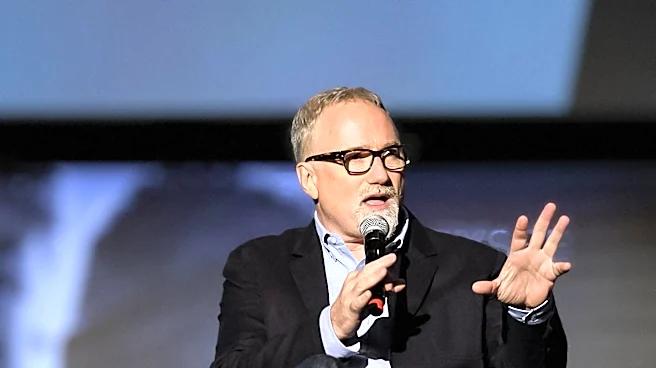
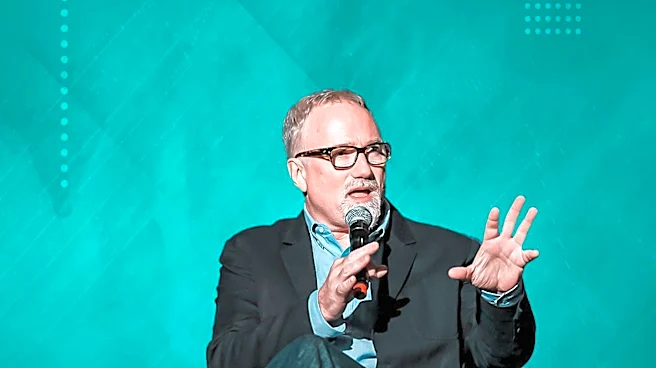
Filmmaker David Fincher has publicly dismissed the controversy surrounding the use of Artificial Intelligence (AI) in cinema, particularly in relation to his film, 'The Further Mis-Adventures Of Cliff Booth.' Fincher views the debate over AI as a 'culture
war' that has little to do with the actual craft of filmmaking. He acknowledged using AI in post-production for sound and ADR-like sections but did not elaborate on the extent of its use or address allegations of generative AI. Fincher expressed frustration with what he perceives as nostalgia and complaints dominating discussions about cinema, advocating for technological exploration rather than a return to older formats like VistaVision, which has been championed by other filmmakers such as Paul Thomas Anderson and Alejandro González Iñárritu. He emphasized that his primary goal is storytelling, utilizing available tools and resources to bring narratives to life.
Why It's Important?
Fincher's stance is significant as it comes from a prominent director and highlights a growing divide within the film industry regarding technological innovation. His dismissal of the AI controversy as a 'culture war' could influence how other filmmakers and studios approach the integration of AI, potentially accelerating its adoption in various aspects of production. This perspective challenges traditional filmmaking methods and could lead to new creative possibilities, but also raises concerns among purists and those worried about job displacement or the authenticity of cinematic art. The debate underscores the tension between artistic integrity and technological progress, impacting future funding, production pipelines, and the aesthetic direction of American cinema. The industry will likely continue to grapple with these questions as AI capabilities advance.
What's Next?
The ongoing debate surrounding AI in filmmaking is expected to intensify as more productions incorporate the technology. Fincher's comments may encourage further experimentation with AI, potentially leading to more widespread adoption in areas like visual effects, sound design, and even script development. However, this could also provoke stronger reactions from unions, artists, and audiences who are concerned about the ethical implications and the potential impact on human creativity and employment. Future discussions will likely focus on establishing guidelines, regulations, and best practices for AI use in the industry to balance innovation with artistic and labor considerations. The reception of films utilizing AI, such as 'The Further Mis-Adventures Of Cliff Booth,' will also play a role in shaping public and industry opinion.
Beyond the Headlines
Beyond the immediate controversy, Fincher's perspective touches upon a broader philosophical question about the nature of art and technology. His argument that cinema's history suggests ample room for technological exploration challenges the notion that certain traditional methods are inherently superior. This viewpoint could foster a more open-minded approach to innovation, pushing the boundaries of what is possible in storytelling. However, it also raises ethical considerations about authorship and the potential for AI to dilute the human element in creative works. The 'culture war' Fincher references reflects a deeper societal anxiety about the role of AI in various industries, prompting discussions about the future of work, creativity, and human-machine collaboration in an increasingly technologically advanced world. The long-term implications for intellectual property and artistic ownership will also be a critical area of focus.