


What's Happening?
Rothy's, a well-known footwear brand, has introduced a new product called the Penny Clog, a loafer-clog hybrid designed for the fall season. This new addition to their lineup is made from recycled materials, specifically plastic water bottles, and is available
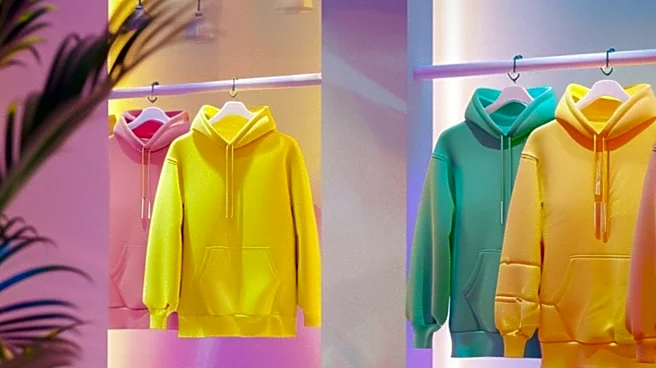
in two fabrications: the brand's signature knit and plush ReVelvet. The Penny Clog comes in five colorways, with the brown-and-cream cow print being a standout. The clogs are machine washable and feature a supportive footbed, requiring no break-in time. Meanwhile, Hanna Andersson, a popular children's clothing brand, is hosting a pop-up event at the Mill Valley Lumber Yard on August 15th. The event will feature a selection of back-to-school clothing, interactive experiences, and activities for children. Hanna Andersson is known for its durable, responsibly made clothing free from harmful chemicals.
Why It's Important?
The launch of Rothy's Penny Clog highlights the growing trend of sustainable fashion, as the brand continues to use recycled materials in its products. This aligns with increasing consumer demand for environmentally friendly products. The introduction of a versatile and stylish clog could strengthen Rothy's market position as a leader in sustainable footwear. On the other hand, Hanna Andersson's pop-up event signifies the importance of experiential retail in engaging customers, especially in the competitive back-to-school shopping season. By offering interactive experiences and customizable products, Hanna Andersson aims to enhance customer loyalty and attract new shoppers. Both developments reflect broader trends in the retail industry, where sustainability and customer engagement are becoming key differentiators.
What's Next?
Rothy's will likely continue to innovate and expand its product line with sustainable materials, potentially exploring new styles and collaborations to maintain its competitive edge. The success of the Penny Clog could lead to further iterations or seasonal updates. For Hanna Andersson, the pop-up event could serve as a model for future experiential retail initiatives, potentially leading to more events in different locations. The brand may also explore partnerships with other retailers or venues to expand its reach. Both companies will need to monitor consumer feedback and market trends to adapt their strategies effectively.