







What's Happening?
Consumer Reports has released findings on energy-efficient appliances that can help U.S. households reduce their utility bills amidst rising costs of electricity, natural gas, and water. The organization emphasizes checking Energy Star and EnergyGuide
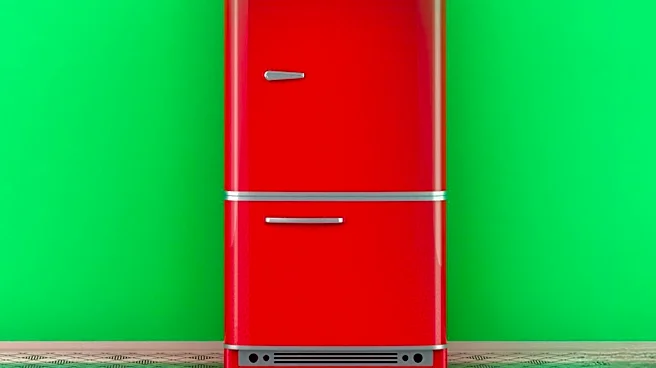
labels when shopping, but also conducts real-world tests to provide more accurate usage cost estimates. For refrigerators, a top-freezer model like the Frigidaire FFHT1425VV ($746) is recommended for its annual usage cost of $37-$97. For more space, the bottom-freezer GE GDE21EYKFS ($1973) offers an annual cost of $34-$105. The Frigidaire FCFI3082BS induction range ($1,099) is highlighted for its balance of performance and low annual usage cost of around $83. To save on clothes drying, an efficient washing machine like the LG WM4000HWA ($945) is suggested, as it extracts more water, reducing dryer workload. Heat pump dryers are noted for significant energy savings, though they have longer drying times.
Why It's Important?
This information is crucial for U.S. consumers facing increasing household expenses, as it provides practical guidance on making informed purchasing decisions for major appliances. Investing in energy-efficient models can lead to substantial long-term savings on utility bills, directly impacting household budgets. For the appliance industry, Consumer Reports' recommendations can influence consumer demand, encouraging manufacturers to prioritize energy efficiency in their product development. This trend also supports broader national goals of energy conservation and reduced carbon emissions. The detailed cost analysis helps consumers understand the true cost of ownership beyond the initial purchase price, promoting a more sustainable consumption pattern.
What's Next?
Consumers are likely to increasingly prioritize energy efficiency when replacing or purchasing new appliances, driving demand for models with lower operating costs. Appliance manufacturers will continue to innovate and develop more energy-efficient technologies to meet this demand and comply with evolving energy standards. Retailers may highlight energy savings as a key selling point for appliances. The ongoing focus on utility costs could also spur interest in smart home technologies that further optimize energy consumption. Policymakers might consider additional incentives or regulations to promote the adoption of highly efficient appliances, contributing to national energy conservation efforts.