
What's Happening?
The initial assumption that hybrid work would diminish the importance of physical office spaces has been challenged, as the model has instead made the office more critical. With employees working remotely
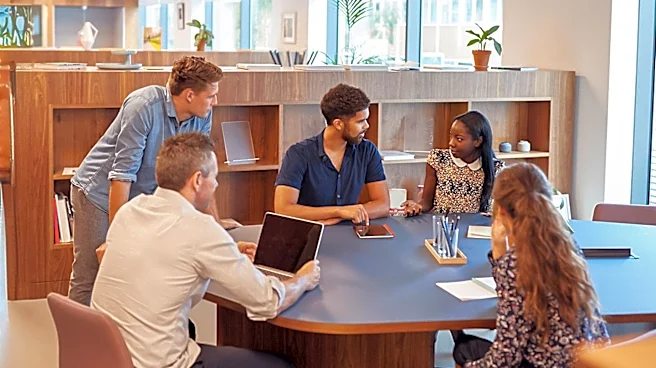
for part of the week, the physical office must now offer compelling reasons for their commute. It needs to actively support collaboration, visibly reinforce company culture, help new staff integrate, and create unique in-person experiences that cannot be replicated at home. This shift necessitates a re-evaluation of office design, moving beyond mere desk-filled rooms to spaces that foster gathering, connection, presentation, creation, learning, hosting, and celebration. Bland offices, once acceptable, are now harder to justify, as employees expect meaningful value from their in-office days. This applies not only to traditional offices but also to customer-facing businesses like retail shops and salons, which must provide memorable physical environments to attract visitors.
Why It's Important?
This development significantly impacts U.S. businesses by redefining the role and design of commercial real estate and workplace strategies. Companies must invest in creating intentional, branded, and experience-rich office environments to attract and retain talent, especially in a competitive labor market where flexibility is a key expectation. The emphasis on physical spaces for culture-building and collaboration means that businesses neglecting office design risk disengaged employees and a diluted company identity. Furthermore, the need for photo-friendly areas for recruitment and social media content highlights the intersection of physical space and digital branding, influencing employer branding and talent acquisition efforts. For the commercial real estate sector, this shift implies a demand for more dynamic, flexible, and aesthetically pleasing office designs, moving away from traditional, utilitarian layouts. Businesses that successfully adapt will likely see improved employee engagement, stronger company culture, and enhanced brand perception, while those that fail to evolve may struggle with retention and productivity.
What's Next?
U.S. businesses are expected to continue investing in transforming their office spaces to meet the elevated standards of hybrid work. This will likely involve redesigning layouts to include more collaborative zones, event spaces, and areas optimized for both in-person and virtual interactions. Companies will focus on incorporating strong physical branding through signage, lighting, and interior features to make the office a tangible representation of their identity. There will be an increased emphasis on creating 'photo-friendly' areas within offices to facilitate content creation for recruitment and marketing. Furthermore, businesses will need to develop strategies to ensure that office visits are purposeful and provide value that employees cannot get from working at home, such as dedicated time for team building, mentorship, and creative workshops. This ongoing evolution will shape future workplace trends, influencing architectural design, interior design, and corporate culture initiatives across various industries.
Beyond the Headlines
The transformation of the physical office in the hybrid work era extends beyond mere aesthetics and functionality; it touches upon deeper psychological and sociological aspects of work. The office is becoming a critical tool for combating the potential isolation and fragmentation of company culture that can arise from remote work. By making the office a 'brand experience' and a 'stage for culture,' businesses are attempting to re-establish a sense of belonging and shared identity that is harder to cultivate purely through digital means. This shift also highlights the evolving social contract between employers and employees, where the commute and in-office time must be justified by tangible benefits and experiences. The emphasis on 'rituals' within the office underscores a human need for collective experiences and shared moments, which are vital for team cohesion and employee well-being. Ultimately, the hybrid office is becoming a curated environment designed to foster human connection and reinforce organizational values in an increasingly distributed workforce.