






What's Happening?
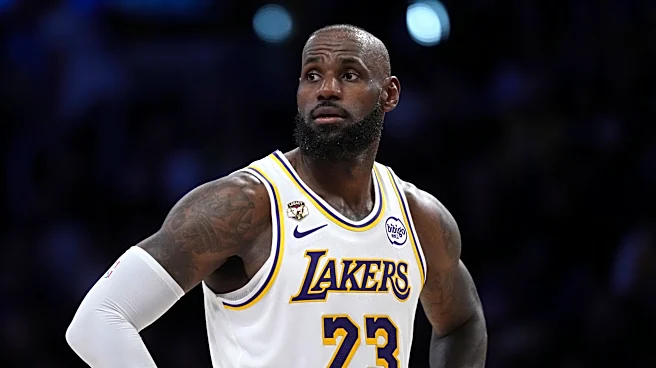
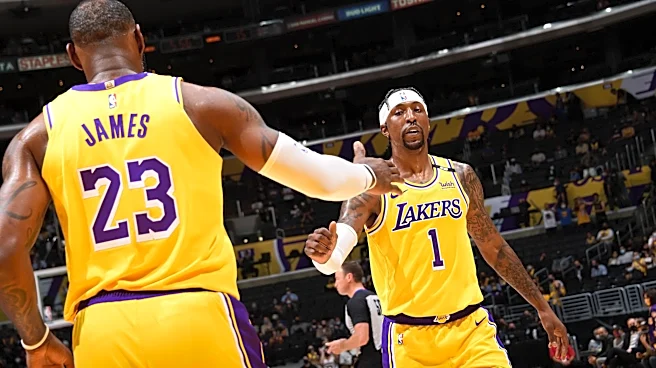
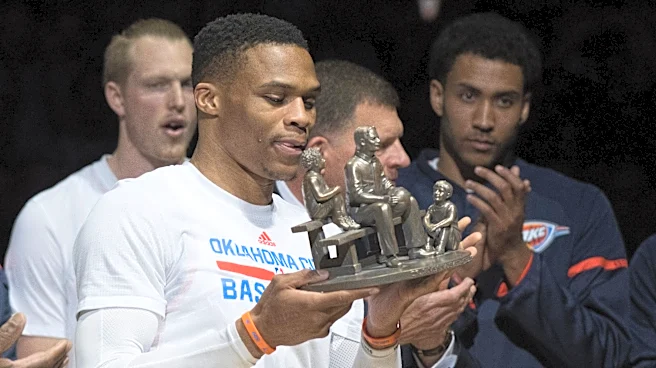
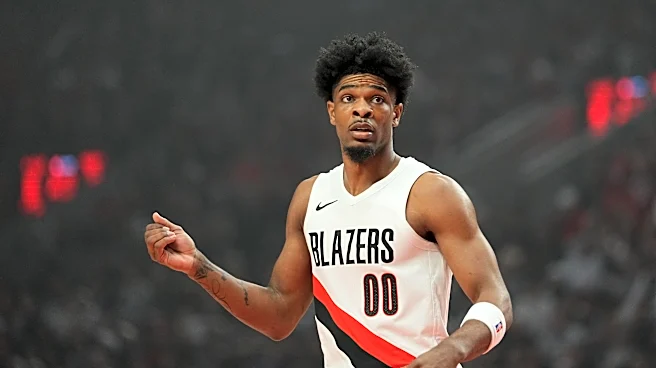
Former NBA player Kwame Brown has accused LeBron James of negatively impacting the careers of several teammates, including Russell Westbrook, Andrew Wiggins, and Dalton Knecht. Brown claims James used media leaks and failed to support these players, ultimately
hindering their development and performance. He characterized James as a 'marketing machine' that 'destroys things around it' to enhance its own image. Brown specifically cited Westbrook's tenure with the Lakers, where he believes James requested Westbrook's acquisition only to quickly give up on him, leading to a decline in Westbrook's career. Wiggins' trade from the Cavaliers for Kevin Love and Knecht's inability to develop were also mentioned as examples of James' alleged detrimental influence.
Why It's Important?
These accusations, if widely accepted, could significantly impact LeBron James' public image and legacy within the NBA. James is often lauded for his leadership and ability to elevate teammates, making these claims a direct challenge to his established narrative. For the players mentioned, particularly Russell Westbrook, the allegations offer a potential re-evaluation of their struggles during their time with James. It could shift public perception regarding accountability for team failures, moving some blame from individual players to the dynamics created by a superstar. This discussion also highlights the immense power and influence star players wield in team decisions and media narratives, potentially affecting how future player acquisitions and team compositions are viewed in the league.
What's Next?
The immediate future will likely involve continued debate and discussion among sports analysts, former players, and fans regarding the validity of Brown's claims. LeBron James or his representatives may choose to respond to these accusations, though it is also possible they will be dismissed as unsubstantiated. The careers of the players mentioned, particularly Westbrook, will continue to be scrutinized in light of these comments. This controversy could also prompt a broader conversation within the NBA about the responsibilities of superstar players towards their teammates and the potential for their influence to either build or hinder other players' careers. It remains to be seen if these accusations will gain significant traction or be largely disregarded.
Beyond the Headlines
Beyond the immediate controversy, Brown's accusations touch upon deeper issues within professional sports regarding player power dynamics and media manipulation. The idea of a 'marketing machine' suggests a calculated effort to control narratives, which could have ethical implications for how player reputations are built and dismantled. It also raises questions about the role of the media in amplifying or challenging these narratives. The claims could foster a more critical examination of how team chemistry is affected by the presence of a dominant star and whether the pursuit of championships sometimes comes at the cost of individual player development. This discussion could lead to a re-evaluation of how success is measured in team sports, extending beyond just wins and losses to include the holistic development and well-being of all players.