






What's Happening?
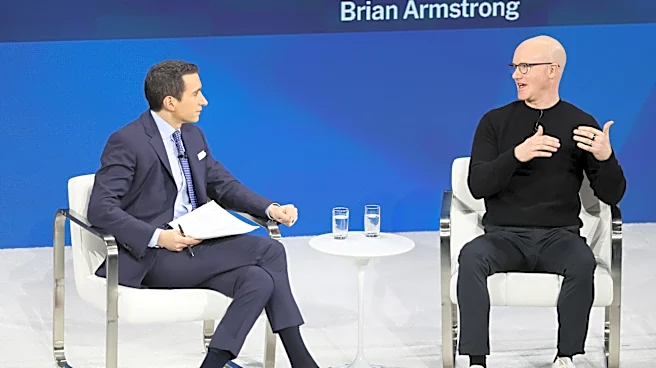
Coinbase CEO Brian Armstrong has confirmed that the company is actively repurchasing its Class A common stock, traded as COIN, during the current quarter. This action is framed as a response to temporary market dislocations driven by the rapid advancements
in cryptocurrency and artificial intelligence. According to the company's Form 10-Q filing for the quarter ending September 30, 2026, Coinbase's board of directors had authorized up to $4 billion in repurchases, with approximately $2 billion remaining available at the end of Q3. Armstrong's comments suggest incremental purchases have occurred since September 30, aligning with the company's strategy to deploy capital opportunistically when share prices appear attractive. Concurrently, Armstrong renewed his call to modernize the rules governing accredited investors in the U.S. private markets. He highlighted that major IPOs in 2026, such as SpaceX, Anthropic, and SK hynix, benefited early investors while ordinary retail investors typically enter at higher valuations. Armstrong proposes replacing the current wealth-based criteria for accredited investor status with a financial literacy examination, arguing that this would expand access to private market participation based on knowledge rather than affluence.
Why It's Important?
Armstrong's advocacy for changes to accredited investor rules carries significant implications for the U.S. investment landscape. By proposing a financial literacy test instead of wealth-based thresholds, he aims to democratize access to early-stage investment opportunities, potentially allowing a broader segment of the population to participate in the growth of private companies before they go public. This could shift wealth distribution and investment opportunities, challenging the current system that largely favors high-net-worth individuals and institutions. If adopted, such a change could foster greater retail investor engagement in venture capital and private equity, potentially altering capital formation dynamics for startups. For Coinbase, the ongoing share repurchases signal management's confidence in the company's long-term value and its strategic use of capital to manage dilution from equity compensation and return value to shareholders. This move could influence investor perception of Coinbase's financial health and its valuation in a volatile market driven by emerging technologies like crypto and AI.
What's Next?
The trajectory of regulatory discussions around private-market eligibility will be a key area to watch. Any formal changes to the accredited investor definition would require further action by the Securities and Exchange Commission (SEC) and potentially Congress, indicating a potentially lengthy process. Stakeholders, including investor advocacy groups, financial institutions, and lawmakers, will likely engage in debates over the balance between investor protection and access to opportunities. Coinbase's share repurchase program will continue to be monitored by investors and market participants to assess the pace of further repurchases under the remaining authorization. The company's capital allocation strategy, particularly in response to market volatility and its valuation, will remain a focus. Furthermore, Armstrong's continued emphasis on the convergence of cryptocurrency and artificial intelligence suggests that Coinbase may further integrate these technologies into its product development, potentially leading to new financial tools and platforms.
Beyond the Headlines
Armstrong's proposal to shift from wealth-based to knowledge-based criteria for accredited investors touches upon deeper ethical and societal implications regarding financial inclusion and opportunity. The current system has been criticized for perpetuating wealth inequality by limiting access to high-growth private investments to those already affluent. A financial literacy test could empower individuals from diverse economic backgrounds to participate, potentially fostering a more equitable distribution of investment returns. However, implementing such a test would present challenges, including defining what constitutes adequate financial literacy and ensuring the test is fair, accessible, and not subject to manipulation. This debate also highlights the evolving nature of investor protection in an era of rapidly changing financial technologies. The long-term shift could be towards a more meritocratic investment environment, but it would require careful regulatory design to prevent unintended consequences and ensure robust investor safeguards.