


What's Happening?
Red Bull Racing's technical director, Pierre Waché, has indicated that the team's first in-house Formula 1 power unit is currently between 40 and 50% complete, yet possesses 'massive' potential. This assessment comes despite the FIA's ADUO evaluation
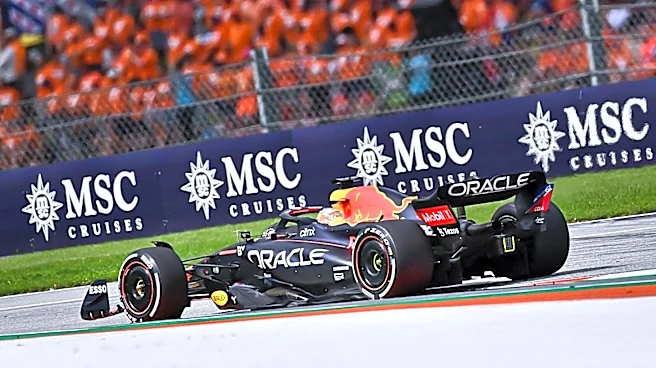
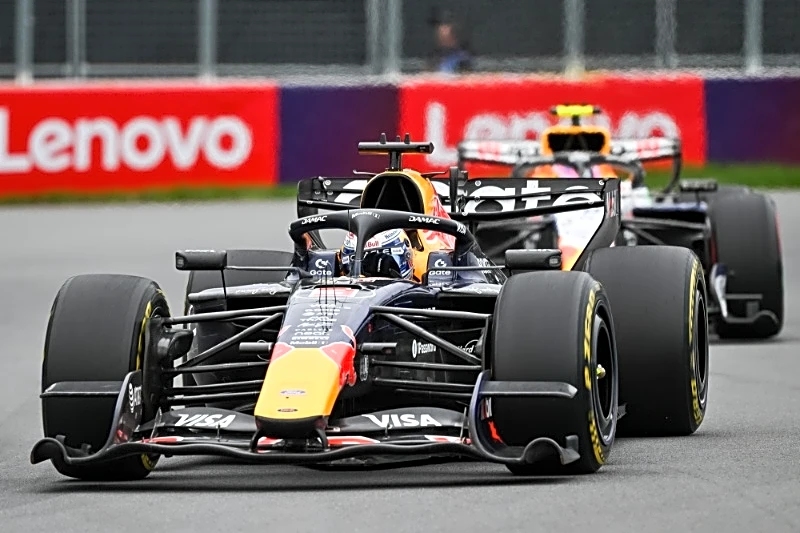
revealing that Red Bull's internal combustion engine already generates the highest output among all competitors on the grid. The team, which historically relied on external engine manufacturers like Cosworth, Ferrari, Renault, and Honda, began developing its own power unit in-house for the 2026 season in partnership with Ford. This new unit, the 1.6-litre turbocharged V6 known as the Red Bull Ford DM01, is being built by Red Bull Powertrains in Milton Keynes. Waché emphasized that while the journey is not over, owning the entire package provides more freedom and capacity for performance improvement. The integration of engine and chassis development has presented a learning process due to differing development cycles, with engines requiring much longer lead times than chassis.
Why It's Important?
The development of Red Bull Racing's in-house power unit marks a significant shift in Formula 1, potentially altering the competitive landscape. By developing its own engine, Red Bull gains greater control over its car's overall performance and design, moving away from the constraints of customer teams that adapt their chassis to a pre-existing power unit. This vertical integration could lead to a more optimized and cohesive car package, giving Red Bull a sustained competitive advantage. The fact that their 'half-finished' engine already boasts the highest output on the grid, according to FIA assessments, suggests a formidable future for the team. This could pressure rival manufacturers like Mercedes, Audi, Honda, and Ferrari to accelerate their own development, intensifying the technological arms race in F1. The success of this project could also influence other teams to consider in-house engine development, reshaping the sport's technical and strategic approaches.
What's Next?
Red Bull Racing will continue the development of its in-house power unit, aiming to unlock its full potential beyond the current 40-50% completion. The team's focus will be on further integrating the engine and chassis development processes, streamlining communication and collaboration between the two departments. As the 2026 season progresses, Red Bull will likely introduce further refinements and upgrades to the DM01 power unit, seeking to maintain and extend its performance advantage. The ongoing learning process for the team in managing both engine and chassis development cycles will be crucial. Rival teams will be closely monitoring Red Bull's progress, and their own development strategies for future seasons will undoubtedly be influenced by the performance of the Red Bull Ford DM01. The upcoming races will serve as critical testing grounds for these ongoing developments.
Beyond the Headlines
The decision by Red Bull Racing to develop its own power unit represents a strategic long-term investment that goes beyond immediate race results. It signifies a commitment to self-sufficiency and innovation, potentially establishing a new benchmark for technical excellence in Formula 1. This move could foster a culture of comprehensive engineering within the team, where engine and chassis designers work in closer synergy, leading to groundbreaking advancements. Furthermore, the partnership with Ford brings a major automotive player into a more central role in F1 engine development, potentially attracting more such collaborations in the future. The 'massive' untapped potential mentioned by Pierre Waché suggests that the current performance is just a glimpse of what's to come, hinting at a future where Red Bull could dominate not just with driving talent, but with unparalleled technological integration and innovation. This could redefine what it means to be a top-tier constructor in Formula 1.