



What's Happening?
Psychologists and mental health professionals are observing and analyzing the phenomenon of 'parallel play' in adult romantic relationships. This concept, traditionally associated with childhood development where children play separately but side-by-side,
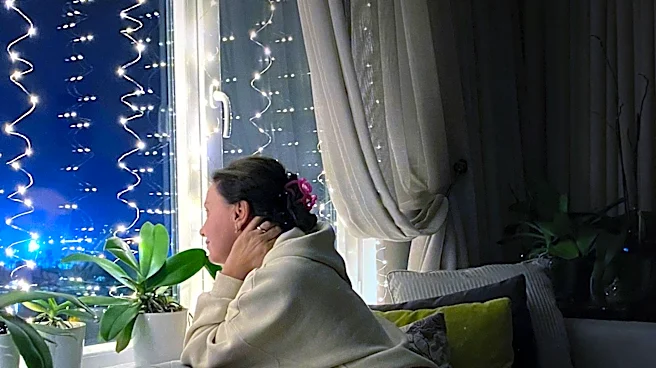
is now being applied to adults who engage in individual activities while in the presence of their partner. Examples include one partner scrolling social media while the other watches television. Hannah Owens, a licensed social worker and Mental Health Editor for Verywell Mind, notes the relevance of this behavior for adult couples. This side-by-side non-interaction is increasingly recognized as a common dynamic in modern relationships, offering a sense of togetherness without direct engagement. The discussion centers on understanding both the benefits and potential drawbacks of this form of interaction in maintaining healthy adult bonds.
Why It's Important?
The examination of parallel play in adult relationships is important because it sheds light on evolving dynamics of intimacy and connection in an increasingly digital world. For many couples, this behavior can signify comfort, trust, and security, allowing partners to pursue individual interests while still feeling connected. It fosters a sense of object permanence in relationships, where partners trust that their loved one exists and cares for them even when not directly interacting. This security can reduce anxiety and guilt, enabling both individuals to maintain personal space and hobbies. However, the analysis also highlights a critical balance: while beneficial in moderation, excessive parallel play can lead to complacency, a decline in quality time, and a reduction in physical intimacy and shared interactive experiences, potentially harming the relationship. Understanding this balance is crucial for couples navigating modern relationship challenges.
What's Next?
As awareness of parallel play grows, couples may increasingly evaluate their own relationship habits to ensure a healthy balance between individual and shared activities. Mental health professionals are likely to continue exploring the long-term effects of this behavior, particularly in the context of digital device usage and its impact on relationship quality. Future discussions may focus on strategies for couples to consciously integrate both parallel play and direct interaction into their routines to foster secure attachment and prevent emotional distance. This could involve setting boundaries around screen time during shared moments or intentionally scheduling activities that require full mutual engagement. The ongoing conversation will aim to help couples leverage the benefits of parallel play while mitigating its risks to maintain strong, connected relationships.
Beyond the Headlines
The concept of parallel play in adult relationships touches upon deeper societal shifts in how individuals perceive and experience connection. In an era where personal devices often mediate interactions, the ability to be 'together alone' reflects a nuanced form of intimacy that prioritizes individual autonomy within a shared space. This phenomenon challenges traditional notions of quality time, suggesting that presence, even without direct engagement, can be a form of bonding. However, it also raises ethical considerations about the potential for digital distractions to erode genuine interpersonal connection and empathy. The long-term cultural implication could be a redefinition of what constitutes a 'healthy' relationship, moving towards models that accommodate both individual pursuits and shared presence, provided a conscious balance is maintained. This shift underscores the importance of intentional communication and mutual understanding in navigating modern relationship complexities.