





What's Happening?
Researchers have created a novel textile made from the fungus Cordyceps militaris, known for its self-repairing properties. This living material, developed by scientists at the Chinese Academy of Sciences, can potentially mend itself when damaged. The
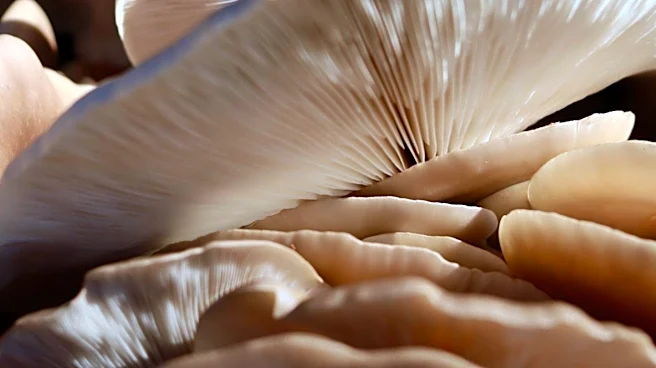
textile is made from fungal hyphae, which form a continuous sheet without the need for conventional fabric supports. The material can be modified with other microorganisms to add features like color and UV protection. This innovation represents a significant step towards sustainable fashion, offering a biodegradable alternative to traditional textiles.
Why It's Important?
The development of a self-repairing, biodegradable textile addresses critical issues in the fashion industry, such as waste and environmental impact. This innovation could lead to more sustainable production practices and reduce the industry's carbon footprint. The ability to repair itself extends the lifespan of garments, potentially reducing consumer waste. Additionally, the use of living materials opens new possibilities for adaptive clothing that can respond to environmental changes, offering a glimpse into the future of smart textiles.
Beyond the Headlines
The use of living materials in fashion raises ethical and practical considerations, such as the conditions required for the material to remain viable and the implications of biodegradability in everyday use. The potential for programmable textiles that adapt to environmental conditions could revolutionize the industry, but also poses challenges in terms of production and consumer acceptance. This development highlights the intersection of biology and technology in creating innovative solutions for sustainable living.