

What's Happening?
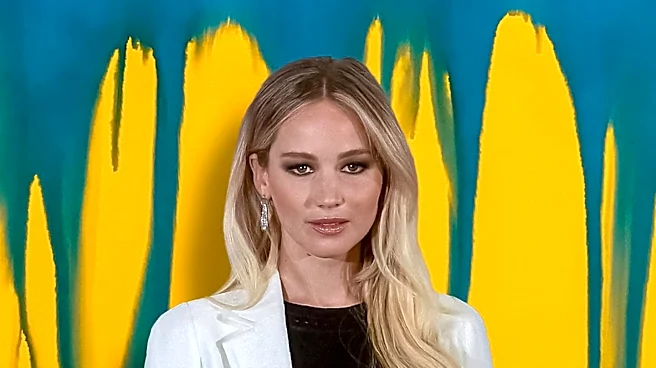
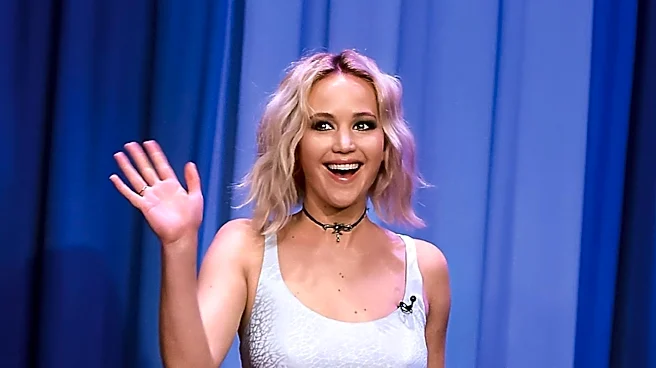
Jennifer Lawrence, the Oscar-winning actress, has shared her approach to cosmetic procedures, specifically Botox, in an interview with Vogue. Lawrence stated that she limits her use of Botox, opting for 'baby Botox' rather than extensive treatments, because
she requires facial movement for her acting career. This revelation comes shortly after director Olivia Wilde commented on the difficulty of finding actresses who can still move their faces due to widespread cosmetic procedures. Lawrence acknowledged the pressure within the industry but emphasized the importance of maintaining natural facial expressions for her craft. She also expressed hesitation about certain procedures like fat transfers, preferring to observe their long-term effects on others, and mentioned a desire for buccal fat removal, though she refrains from it to avoid public scrutiny. Lawrence indicated a preference for radiofrequency treatments to address her cheeks.
Why It's Important?
Jennifer Lawrence's comments highlight a growing concern within the entertainment industry regarding the impact of cosmetic procedures on an actor's ability to perform. The emphasis on facial movement underscores a fundamental aspect of acting, where expressions are crucial for conveying emotion and character. Olivia Wilde's earlier remarks about the scarcity of actresses with natural facial mobility further illustrate this industry-wide challenge. This trend could lead to a shift in casting preferences, potentially favoring actors who have either avoided extensive procedures or found ways to maintain natural movement. For the cosmetic industry, this discussion might influence the development and marketing of procedures that offer more subtle results or focus on skin health rather than drastic alterations. It also brings to light the societal pressures on women in the public eye to maintain a youthful appearance, often at the expense of their professional tools.
What's Next?
The ongoing conversation initiated by figures like Jennifer Lawrence and Olivia Wilde could prompt further discussion and potentially new trends within Hollywood regarding cosmetic procedures. Actors might become more vocal about their choices, and there could be a greater emphasis on natural aging or less invasive treatments that preserve facial mobility. Directors and casting agents may increasingly prioritize natural expressions, influencing the types of roles available and the actors chosen for them. This could also lead to a re-evaluation of beauty standards within the industry, potentially fostering a more accepting environment for natural appearances. For the cosmetic industry, there might be an increased demand for 'baby Botox' or similar subtle procedures, as well as non-invasive treatments like radiofrequency, aligning with actors' needs to maintain their craft while addressing aesthetic concerns.
Beyond the Headlines
Beyond the immediate implications for the entertainment industry, this discussion touches upon broader societal perceptions of beauty, aging, and authenticity. The pressure on public figures, particularly women, to conform to often unrealistic beauty standards is immense, and their choices regarding cosmetic procedures reflect a complex interplay of personal desire, professional necessity, and public scrutiny. Lawrence's decision to prioritize her craft over extensive cosmetic alterations speaks to a potential counter-narrative emerging against the pervasive trend of extreme aesthetic modifications. This could encourage a more nuanced conversation about self-acceptance and the value of natural expression in an increasingly image-conscious world. It also raises ethical questions for the cosmetic industry about promoting procedures that might inadvertently hinder professional capabilities in certain fields.