
What's Happening?
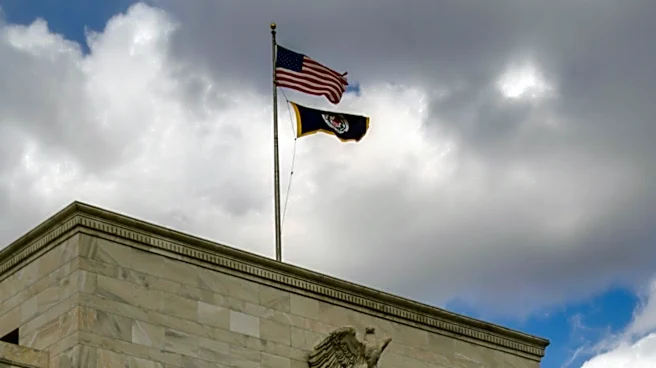
Federal Reserve Governor Lisa Cook indicated on November 20, 2026, that the U.S. central bank might need to implement "additional and larger rate increases" to effectively address persistent inflation. Speaking at the Central Bank of Chile's annual conference
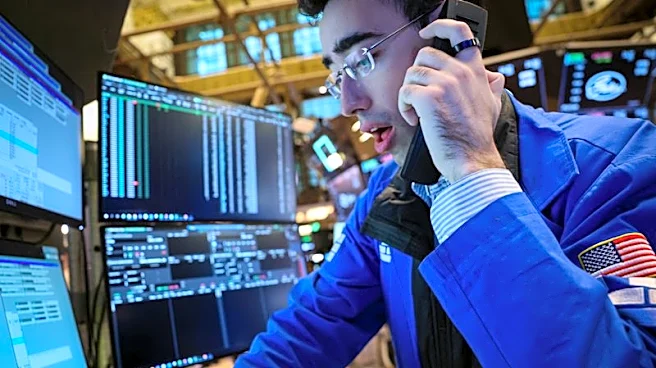
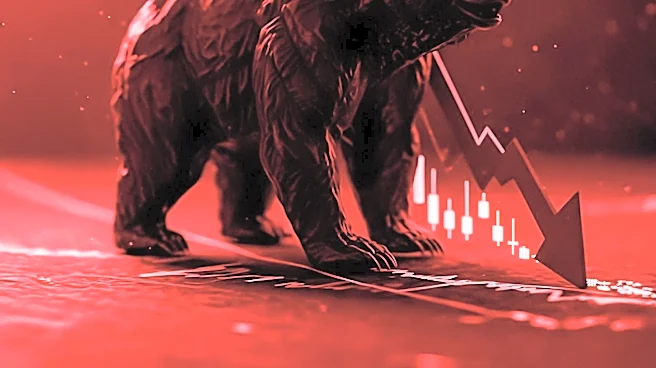
in Santiago, Cook expressed skepticism that the Fed's single quarter-point rate hike in September would be sufficient to alter the current inflationary trajectory. She highlighted that inflation has consistently exceeded the Fed's 2% target for 67 consecutive months. Cook estimated that October's Personal Consumption Expenditures (PCE) prices rose 3.8% over 12 months, with core PCE increasing by 3.2%, based on her analysis of recent data prior to official release. She noted that financial conditions remain too accommodative given the elevated inflation levels. Her remarks coincided with a significant downturn in the stock market, with the S&P 500 falling 3.70% and the Nasdaq Composite dropping 5.28%.
Why It's Important?
Governor Cook's statements signal a potentially more aggressive stance from the Federal Reserve in its fight against inflation, which could have significant implications for the U.S. economy and financial markets. The prospect of larger rate hikes suggests increased borrowing costs for businesses and consumers, potentially slowing economic growth. This hawkish outlook contrasts with the bond market's recent behavior, where falling Treasury yields indicate investor concerns about a potential economic slowdown. The concentration of major tech companies like NVIDIA, Apple, and Microsoft within the S&P 500 makes the index particularly vulnerable to tighter monetary policy, as these high-multiple stocks are sensitive to interest rate changes. If the Fed pursues more substantial rate increases, it could further dampen investor sentiment, impact corporate earnings, and potentially lead to a more pronounced economic contraction, affecting employment and consumer spending.
What's Next?
The financial markets are closely watching for the Federal Reserve's next moves, particularly regarding the December rate decision. Futures markets are currently pricing in approximately a 92% probability of a rate hike in December, though the size of that hike remains a key point of speculation following Governor Cook's remarks. While Cook did not explicitly call for a half-point increase in December, her emphasis on the need to catch up with inflation suggests that such a move is not off the table. The upcoming official release of October PCE data will be crucial in shaping the Fed's decision-making process. Investors will also be monitoring statements from other Fed officials for further indications of the central bank's collective stance on future monetary policy adjustments and the potential for more aggressive tightening measures.
Beyond the Headlines
The divergence between Governor Cook's hawkish outlook and the bond market's signal of slower growth highlights a critical tension in the current economic environment. This disparity suggests differing interpretations of future economic conditions and the appropriate policy response. If the Fed opts for larger rate increases, it risks over-tightening and potentially pushing the economy into a recession, a concern reflected in falling Treasury yields. Conversely, if the Fed under-reacts, inflation could become more entrenched, leading to longer-term economic instability. This situation underscores the delicate balancing act the Federal Reserve faces: curbing inflation without stifling economic activity. The outcome will significantly influence the trajectory of corporate profitability, consumer purchasing power, and overall economic stability in the coming months and years.