





What's Happening?
Planning a day trip to Mt. Fuji from Tokyo requires strategic consideration of viewpoints, travel methods, and timing to maximize the chances of a clear view. The article emphasizes that a Mt. Fuji day trip is primarily about visiting a viewpoint rather
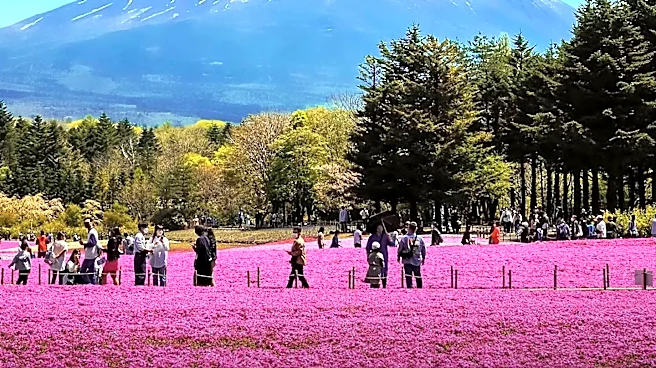
than climbing the mountain itself. Key areas for viewing include Kawaguchiko and the Northern Lakes, known for close-up views, and Hakone, which offers a volcanic landscape with Mt. Fuji as a backdrop. The Fuji Subaru Line Fifth Station provides a high-altitude experience on the mountain but does not offer views of Fuji itself. The best time to see Mt. Fuji is generally during the colder months, from late October through February, when the air is clearer. Mornings also tend to offer better visibility than afternoons. Summer is considered the most challenging season due to humidity and haze. The article advises choosing one area to focus on for a day trip to avoid spending excessive time in transit.
Why It's Important?
For tourists and the travel industry, understanding the optimal conditions and planning strategies for Mt. Fuji day trips is crucial. The advice on choosing specific viewing areas, considering the time of year and day, and selecting appropriate transportation directly impacts visitor satisfaction and the efficiency of tour operations. By highlighting the challenges of summer viewing and the benefits of early morning departures, the article helps manage expectations and improve the overall experience for travelers. This information is vital for tour operators in Tokyo and the Mt. Fuji region to design effective itineraries and for individual travelers to make informed decisions, potentially boosting local tourism by ensuring more positive experiences and repeat visits.
What's Next?
Travelers planning a Mt. Fuji day trip should check weather forecasts and live camera views the evening before and on the morning of their trip. If the Fuji area is predicted to be under heavy cloud cover, the article suggests either postponing the trip if schedules allow or switching to a Hakone itinerary, which offers alternative attractions that are less dependent on clear mountain views. Building a spare day into Tokyo travel plans is recommended for those prioritizing a clear view of Mt. Fuji, allowing flexibility to choose the best day based on weather conditions. Tour operators may continue to refine their offerings based on these insights, potentially offering more flexible booking options or alternative itineraries for cloudy days.
Beyond the Headlines
The article subtly touches upon the environmental and social impact of tourism. The mention of Fujiyoshida City canceling its cherry blossom festival in 2026 due to crowd strain highlights the challenges of managing popular tourist destinations. This suggests a growing awareness among local authorities of the need to balance tourism benefits with the well-being of residents and the preservation of natural sites. The advice to take photographs from the pavement at the famous Lawson convenience store, respecting residents, further underscores the importance of responsible tourism. These details point to a broader trend in the travel industry towards sustainable practices and community engagement, aiming to mitigate the negative consequences of mass tourism while still allowing visitors to enjoy iconic locations.