






What's Happening?
The musical 'Freestyle: A Love Story,' co-produced by Bronx-born musician Judy Torres, is set to debut in Los Angeles on November 6 at the Wilshire Ebell Theatre. The production, created and directed by George Valencia, with Judy Reyes as executive producer
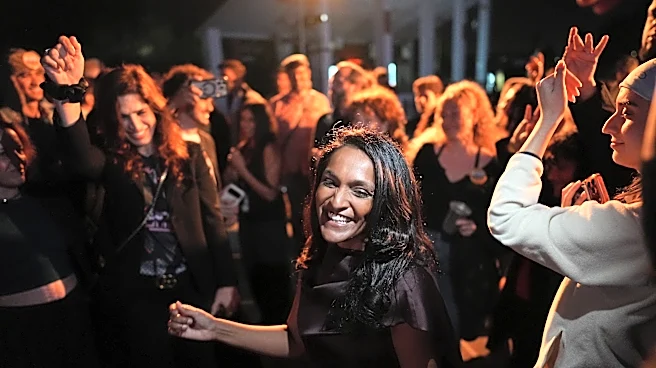
and Ana Ortiz as co-producer, tells the fictional story of two middle-aged Caribbean Latinos who reunite at a Freestyle Extravaganza in New York. The narrative transports them back to 1987, the night they fell in love at a freestyle show, intertwining their romance with the history of the 1980s electro-funk genre. The musical aims to celebrate Latino joy and the cultural impact of freestyle music, which was largely shaped by Latino vocalists and street kids in New York.
Why It's Important?
This musical is significant for its celebration of a distinct 1980s sound and its deep roots in Latino culture, a genre that Judy Torres notes was 'never given flowers.' It highlights the contributions of Latino artists to American music, often overlooked or marginalized in mainstream narratives. The production also addresses the historical challenges faced by Latino artists, such as being pressured to change their Spanish surnames to appeal to broader audiences. By showcasing this vibrant musical movement and its cultural context, 'Freestyle: A Love Story' provides a platform for representation and recognition of Latino heritage and artistic expression. Proceeds from the night will benefit the Sound of GOL Foundation, which supports Latina soccer players, further emphasizing its community impact.
What's Next?
The Los Angeles debut of 'Freestyle: A Love Story' could pave the way for broader recognition of freestyle music and its cultural significance. Its success might encourage more productions that explore and celebrate niche musical genres and their impact on specific communities. The musical's focus on 'revolutionary joy' in the face of adversity, as articulated by George Valencia, resonates with contemporary discussions about cultural resilience and identity. This production could inspire further artistic endeavors that delve into the rich and diverse history of American music, ensuring that the stories and contributions of various cultural groups are brought to the forefront. The benefit for the Sound of GOL Foundation also demonstrates how artistic projects can be leveraged for social good.
Beyond the Headlines
The musical's exploration of freestyle music goes beyond mere nostalgia; it delves into themes of identity, representation, and the struggle for recognition within the music industry. The experiences of artists like Judy Torres, who were told to change their names, shed light on the systemic biases prevalent in the past. The musical implicitly argues that while the freestyle movement may have 'fizzled out' in the 1990s, its cultural legacy and impact on Latino communities remain profound. By bringing these stories to the stage, 'Freestyle: A Love Story' contributes to a larger cultural conversation about who gets to tell their stories, whose music is celebrated, and how art can serve as a powerful tool for cultural affirmation and historical reclamation.