





What's Happening?
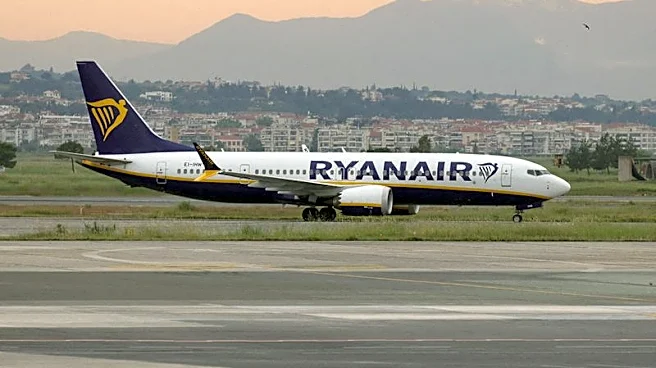
Ryanair has reported a significant 34% drop in its first-quarter profit, attributed to high jet fuel costs and fare reductions necessitated by the Middle East conflict. The airline's profit after tax fell to €538 million, with fares decreasing by 6% during
the quarter. The conflict has led to consumer hesitancy and economic uncertainty, impacting bookings. Ryanair's operating costs rose by 11%, partly due to the unhedged portion of its fuel costs, which more than doubled. Despite these challenges, Ryanair remains optimistic about its long-term growth, with plans to expand its fleet with more fuel-efficient Boeing 737 Max 10 aircraft.
Why It's Important?
The decline in Ryanair's profits highlights the broader challenges facing the airline industry amid geopolitical tensions and fluctuating fuel prices. The situation underscores the vulnerability of airlines to external shocks, such as conflicts and economic instability, which can significantly impact profitability and operational costs. Ryanair's experience serves as a cautionary tale for other airlines, emphasizing the importance of strategic fuel hedging and cost management. The company's strong balance sheet and efficient fleet position it well for future growth, but the industry as a whole may face continued volatility.
What's Next?
Ryanair is preparing for a 'difficult winter' as it anticipates continued challenges from geopolitical tensions and economic uncertainty. The airline is hedged for 80% of its fuel needs until 2027, providing some insulation against price volatility. Ryanair plans to continue expanding its fleet with more efficient aircraft, aiming to grow its passenger numbers significantly by 2034. The company will closely monitor geopolitical developments and fuel prices, which will influence its financial performance and strategic decisions in the coming months.