



What's Happening?
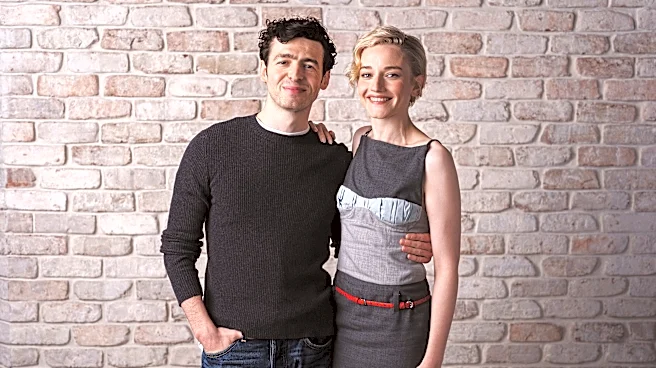
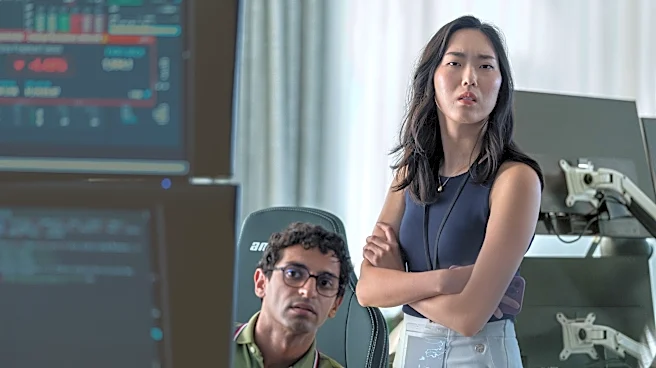
Former FTX COO Constance Wang has publicly criticized Netflix's limited series 'The Altruists,' which is inspired by the real-life story of Sam Bankman-Fried and Caroline Ellison. Wang took to social media to express her disappointment, stating that Netflix did
not consult her for the series. She specifically highlighted what she described as a 'very stereotypical' portrayal of her character, played by Madison Hu, including the use of a Chinese accent that Wang does not possess. Wang commented that she and other former employees of FTX and Alameda Research found that the show bore little resemblance to actual events, beyond the names of the individuals involved. The series, which premiered on November 19, depicts Bankman-Fried and Ellison as 'two hyper-smart, ambitious young idealists' accused of stealing $8 billion. Bankman-Fried was convicted on seven counts of fraud and conspiracy related to the collapse of FTX and Alameda Research, with the U.S. government alleging he defrauded investors and customers of over $10 billion.
Why It's Important?
Constance Wang's criticism of 'The Altruists' raises significant questions about the accuracy and ethical considerations in adapting real-life events, particularly those involving high-profile financial scandals, for entertainment. Her claims of a 'racist' and 'stereotypical' portrayal, coupled with the lack of consultation, highlight potential issues of misrepresentation and cultural insensitivity in media productions. This situation could influence how future biographical dramas are approached, potentially leading to increased scrutiny from individuals whose lives are depicted. For Netflix, such public backlash from a key figure in the actual events could impact its reputation for factual integrity in its 'inspired by true events' content. It also underscores the broader challenge for creators to balance dramatic storytelling with factual accuracy and respectful representation, especially when dealing with sensitive and legally complex subjects like the FTX collapse.
What's Next?
The public criticism from Constance Wang may prompt further discussion within the entertainment industry regarding the responsibilities of creators when dramatizing real-life events and individuals. While Netflix has not yet publicly responded to Wang's specific allegations, the controversy could lead to increased calls for greater consultation with real-life subjects or their representatives in future productions. This incident might also encourage other individuals involved in the FTX scandal, or similar high-profile cases, to voice their perspectives on media portrayals. For viewers, Wang's comments could influence their perception of 'The Altruists' and other 'true story' adaptations, potentially leading to a more critical evaluation of such content's accuracy and fairness. The broader conversation around media ethics and representation in biographical dramas is likely to continue.
Beyond the Headlines
Wang's critique extends beyond mere factual inaccuracies, touching upon deeper issues of cultural representation and the power dynamics inherent in media portrayals. Her statement about the 'stereotypical' Chinese accent points to a persistent problem in Hollywood where ethnic characters are sometimes reduced to caricatures rather than nuanced individuals. This incident could fuel ongoing debates about diversity and authenticity in casting and character development, particularly for non-Western characters. Furthermore, the lack of consultation with Wang, a central figure, raises ethical questions about the 'right to one's own story' versus artistic license. It highlights how media narratives, even those 'inspired by' true events, can shape public perception and potentially perpetuate harmful stereotypes, especially when the subjects are from marginalized groups or are involved in complex legal and financial sagas. This situation underscores the significant impact media can have on individuals' reputations and the collective understanding of historical events.