





What's Happening?
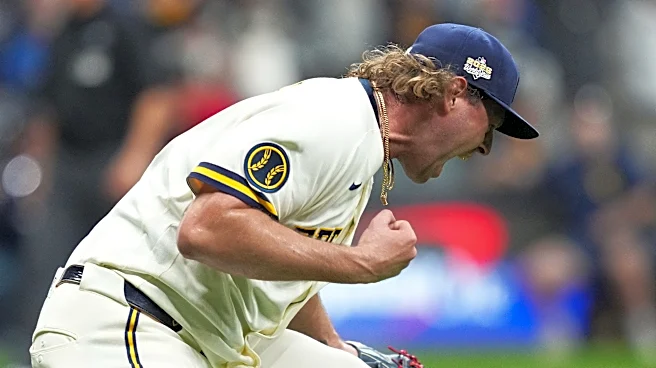
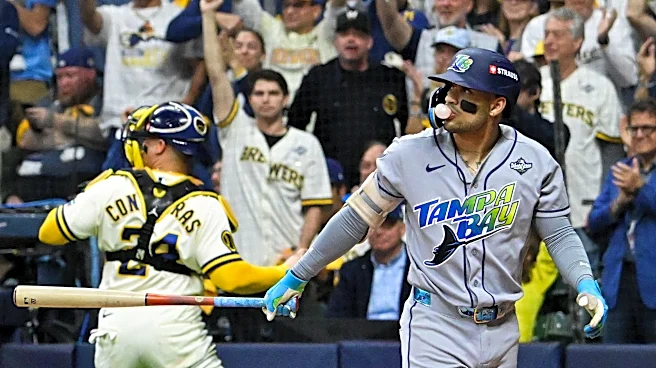
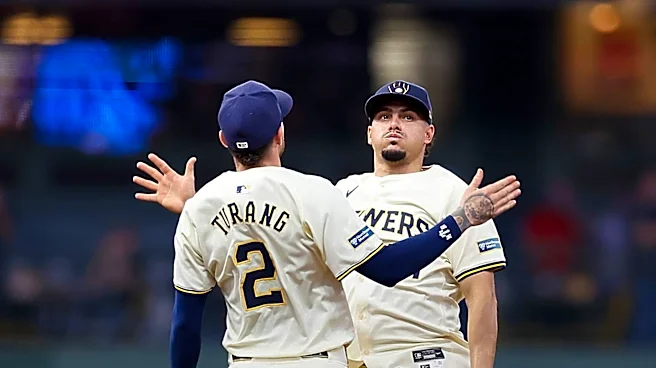
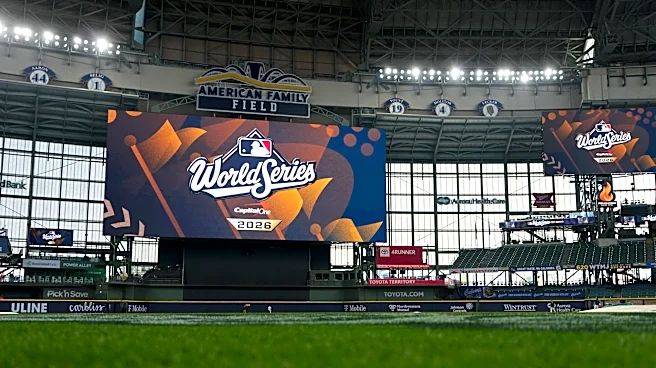
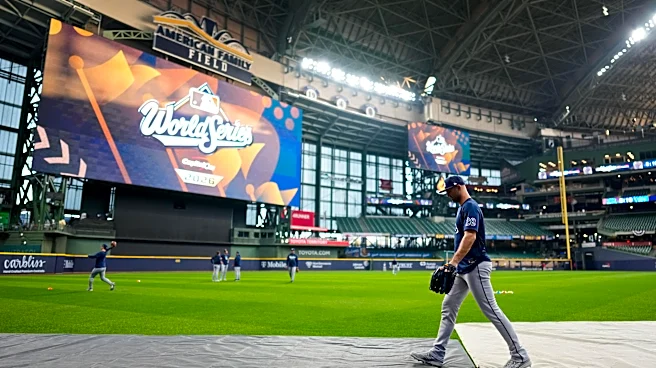
The World Series commenced last night with a game between the Brewers and the Rays in Milwaukee. The Brewers secured a 3-1 lead heading into the top of the ninth inning. The Rays mounted a rally, loading the bases with one out. A sharp ground ball to second
base resulted in what appeared to be a 4-6-3 double play, seemingly ending the game with a Brewers victory. However, the Rays challenged the out call at second base. After a lengthy review, the replay official determined that the shortstop's foot left the bag a fraction of a second before the ball entered his glove, overturning the call. This decision allowed a run to score, leaving runners on second and third with two outs. Fortunately for the Brewers, the next batter struck out, preserving their 3-1 win.
Why It's Important?
This controversial replay call in a high-stakes World Series game highlights ongoing debates within baseball regarding the role and impact of technology in officiating. While replay is intended to ensure accuracy, this instance demonstrates how slow-motion analysis can alter plays that would traditionally be considered clear outs by the naked eye. The decision sparked discussion about the spirit of the game versus the letter of the rule, particularly for 'bang-bang' plays where fractions of a second dictate outcomes. Such calls can significantly influence game momentum and results, potentially diminishing the role of on-field umpires and prolonging game times. It also puts increased scrutiny on players' fundamental techniques, as evidenced by the comment, 'Stay on the bag,' suggesting a need for even greater precision in defensive plays.
What's Next?
The debate surrounding replay in baseball, particularly for close plays at bases, is likely to intensify following this World Series incident. Players and coaches may adjust their defensive techniques to account for the hyper-scrutiny of replay, focusing on absolute precision in foot placement and glove timing. Baseball officials might face renewed calls to re-evaluate the parameters for replay reviews, especially concerning plays that are fundamentally decided by human perception in real-time versus slow-motion analysis. While technologies like the pitch clock and electronic strike zones have been largely accepted for improving game flow and consistency, the application of replay to subjective, split-second field plays remains a contentious issue that could lead to further rule adjustments or clarifications in future seasons.
Beyond the Headlines
The replay controversy in the World Series opener touches upon a broader philosophical question about the essence of sports and the pursuit of perfect officiating. While technology offers the promise of eliminating human error, it can also inadvertently alter the traditional flow and interpretation of the game. The 'fraction of a second' decision raises questions about whether the pursuit of absolute technical correctness sometimes overrides the intuitive understanding of a play. This incident reflects a tension between tradition and technological advancement in sports, where the desire for fairness must be balanced against the potential for over-officiating and the disruption of natural gameplay. It also underscores how technology can change player behavior and strategic approaches, as athletes adapt to new levels of scrutiny.