






What's Happening?
The Department of Commerce's Bureau of Industry and Security (BIS) has extended the suspension of its 'End-User Controls to Cover Affiliates of Certain Listed Entities' rule until January 10, 2027. This rule, initially issued as an Interim Final Rule
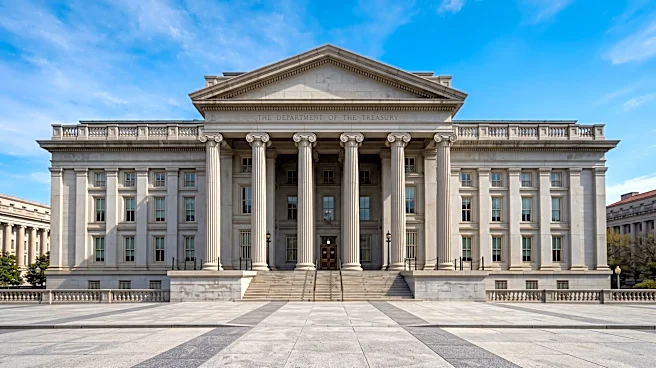
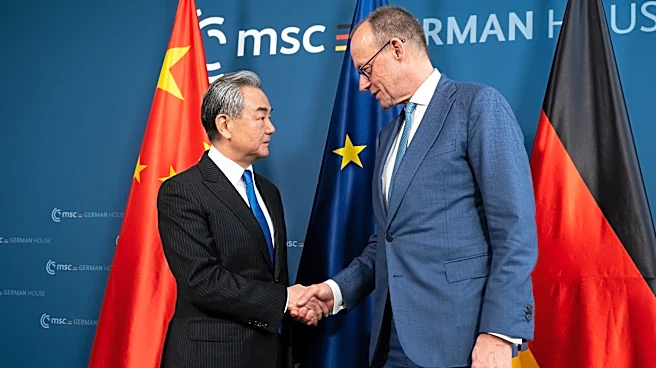
on September 30, 2025, was designed to extend export control restrictions to any entity owned 50% or more, individually or in aggregate, by parties on the BIS Entity List or the Military End-User (MEU) List. The suspension was set to expire on November 9, 2026, but a further extension was informally announced following a recent U.S.-China summit. The original rule was modeled on the Treasury Department's Office of Foreign Assets Control's '50% Rule' used in economic sanctions enforcement. This extension provides continued relief for companies that might otherwise face export control restrictions due to their affiliations with listed entities.
Why It's Important?
This extension is significant for U.S. businesses with operations or partnerships in China, particularly those with complex ownership structures. The 'Affiliates Rule' could have imposed substantial compliance burdens and restricted trade for many American firms by broadly applying export controls to entities indirectly linked to listed Chinese companies. By suspending the rule, BIS is temporarily alleviating these potential restrictions, which could help maintain existing supply chains and business relationships. The decision reflects ongoing efforts to manage trade relations between the U.S. and China, balancing national security concerns with economic stability. Companies that would have been impacted by the rule can continue their operations without immediate changes to their export compliance strategies, though the long-term future of the rule remains uncertain.
What's Next?
The suspension provides a temporary reprieve, but U.S. companies with Chinese affiliations should continue to monitor developments closely. The extension until January 10, 2027, suggests that the U.S. government is still evaluating the long-term implications of such broad export controls. Businesses should use this period to assess their ownership structures and supply chains for potential future compliance challenges if the rule is eventually implemented. The informal announcement of the extension after a U.S.-China summit indicates that such decisions are often influenced by broader diplomatic and trade discussions. Future U.S.-China relations and domestic policy shifts could determine whether the 'Affiliates Rule' is permanently rescinded, further extended, or fully implemented.
Beyond the Headlines
The repeated suspension of the 'Affiliates Rule' highlights the intricate balance the U.S. government seeks to strike between national security objectives and economic interests in its relationship with China. While the rule aims to prevent U.S. technology from supporting entities deemed a threat, its broad application could inadvertently harm legitimate U.S. businesses and disrupt global trade. This situation underscores the challenges of implementing targeted sanctions and export controls in an interconnected global economy. The 'near miss' aspect of the rule's implementation and subsequent suspension also points to the dynamic and often reactive nature of trade policy, where initial proposals can be modified based on feedback and geopolitical considerations. The ongoing debate reflects a broader tension between decoupling and maintaining economic engagement with China.