






What's Happening?
Oklo Inc., a California-based company, has clarified its plans for a potential medical radiopharmaceuticals plant in Indiana's LEAP District, stating that the facility will not include electricity-producing nuclear power generation. This clarification
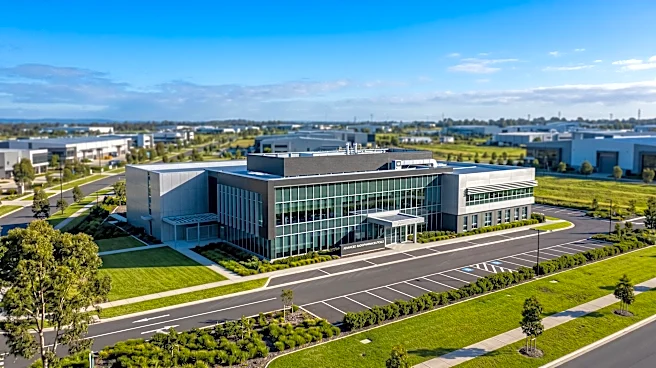
comes after legislators raised questions during a State Budget Committee review of an Indiana Economic Development Corp. (IEDC) request for $20 million in funding to expand the LEAP District for the Oklo project. The initial contract from September listed 'nuclear power generation' as a possible use, alongside radioisotope production and research and development. Oklo's updated agreement with the IEDC also reduces its potential land purchase from up to 440 acres to a maximum of 220 acres. The company is considering a $1.5 billion facility that would house a reactor specifically designed to produce radioisotopes for medical use.
Why It's Important?
This clarification is crucial for addressing public and legislative concerns regarding nuclear power generation within the LEAP District, a significant economic development zone in Indiana. The initial mention of nuclear power had raised environmental and safety questions, potentially impacting community acceptance and regulatory processes. By explicitly stating that the facility will focus solely on medical radioisotope production, Oklo aims to alleviate these concerns, which is vital for the project's progression. The $1.5 billion investment in a medical radiopharmaceuticals plant represents a substantial economic boost for Indiana, creating high-tech jobs and positioning the state as a leader in advanced medical manufacturing. This development is important for the U.S. healthcare sector, as radioisotopes are essential for diagnostic imaging and cancer therapies, and a domestic production facility can enhance supply chain security and reduce reliance on foreign sources.
What's Next?
Oklo Inc. has not yet made a final decision on proceeding with the project in the LEAP District, but it continues to evaluate Lebanon as a potential location and engage with the local community. The company is committed to ongoing dialogue and providing updates. The IEDC's request for $20 million in funding for land expansion has been approved by the State Budget Committee, indicating continued state support for the project. Future steps will likely involve further community engagement, detailed environmental impact assessments, and securing necessary permits and licenses for the specialized radioisotope production facility. The reduction in land acquisition also suggests a more focused and potentially less impactful footprint for the proposed plant. The project's success will depend on continued collaboration between Oklo, the IEDC, and local stakeholders to ensure all concerns are addressed and regulatory requirements are met.
Beyond the Headlines
The controversy surrounding Oklo's initial plans highlights the broader public sensitivity and regulatory complexities associated with nuclear technology, even for non-power generation applications. The distinction between electricity-producing nuclear reactors and isotope-producing reactors is critical but often misunderstood by the public. This incident underscores the importance of clear communication and transparency from companies and government agencies when proposing projects involving advanced technologies. For the LEAP District, which aims to attract high-tech businesses, managing public perception and ensuring environmental safety are paramount for its long-term success. This situation also reflects the growing demand for medical radioisotopes and the strategic importance of establishing domestic production capabilities to support advancements in healthcare and national security in the U.S.