

What's Happening?
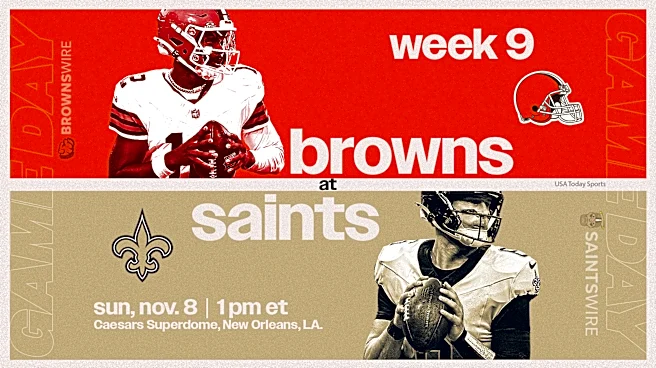
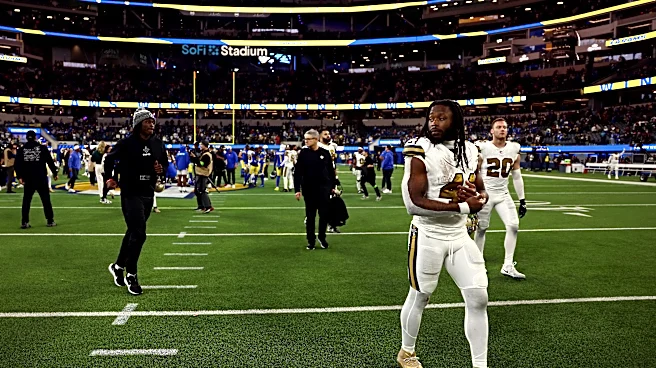
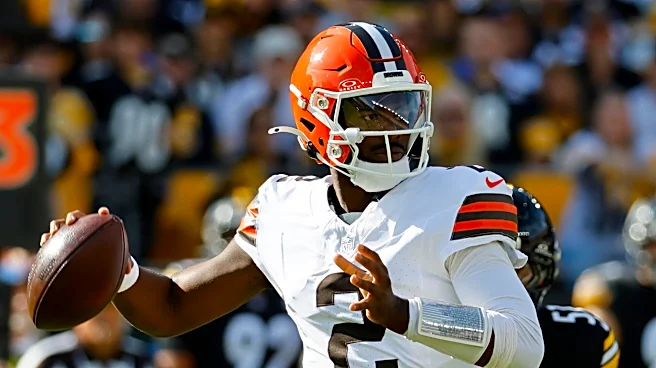
The New Orleans Saints secured an overtime victory against the Cleveland Browns with a final score of 23-22. The Browns, trailing by one point in overtime, opted for a two-point conversion attempt to win the game but failed to convert, with quarterback
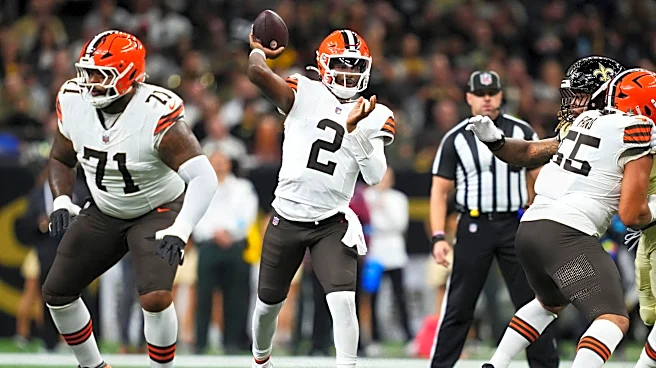
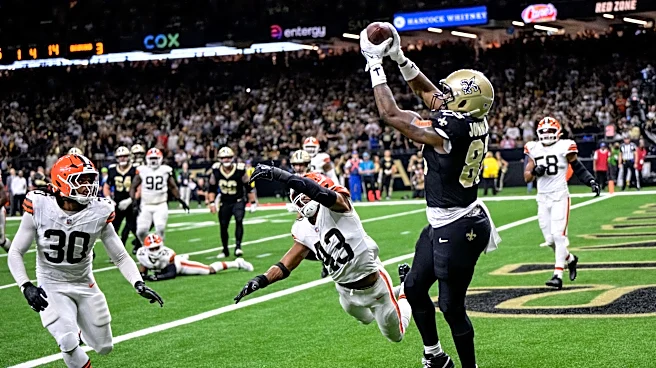
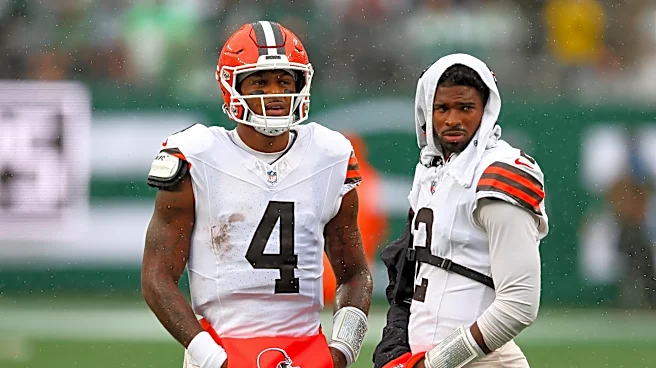
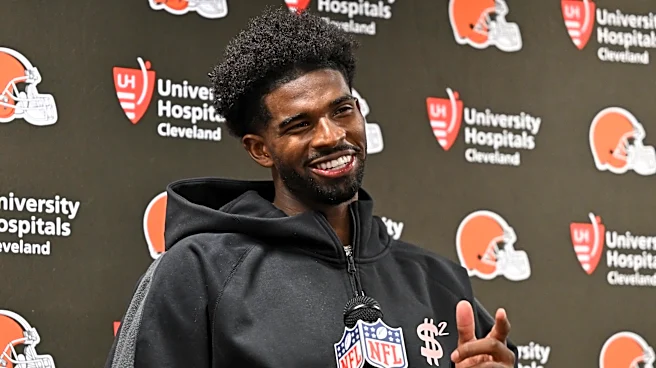
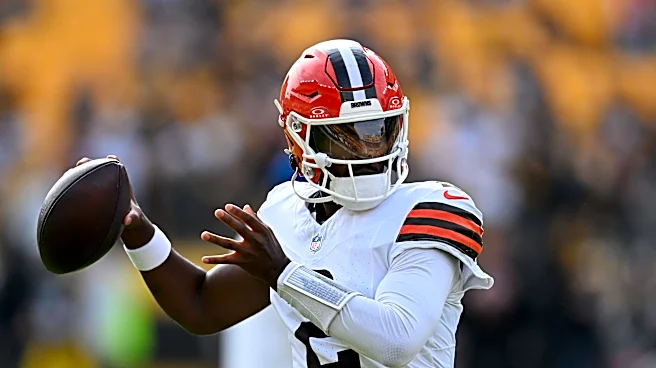
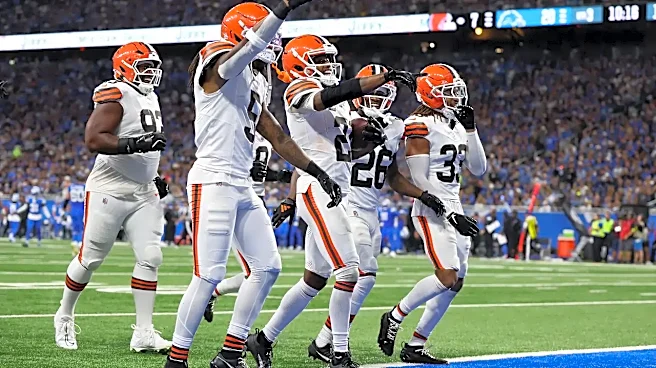
Shedeur Sanders' pass falling incomplete. The game saw several lead changes and dramatic plays, including a 39-yard touchdown by Browns tight end Harold Fannin Jr. to bring them within one point in overtime. Earlier, Saints quarterback Tyler Shough connected with Juwan Johnson for a touchdown to take the lead in the extra period. The game was forced into overtime by a 51-yard field goal from Andre Szmyt with eight seconds left in regulation. Browns quarterback Shedeur Sanders, filling in for the injured Deshaun Watson, completed 19 of 31 passes for 297 yards and two touchdowns, but was sacked five times. The Browns also struggled with penalties, accumulating six in the first quarter and ten overall.
Why It's Important?
This loss drops the Cleveland Browns to a 5-4 record, potentially impacting their playoff aspirations in a competitive AFC conference. The decision by head coach Todd Monken to go for a two-point conversion rather than kicking an extra point to tie the game in overtime will likely be a significant point of discussion and scrutiny. Such aggressive play-calling can either be lauded for its boldness or criticized for its risk, especially when unsuccessful. For the Saints, the victory improves their standing and provides crucial momentum in their season. The performance of Shedeur Sanders, while showing flashes of potential with two touchdowns and nearly 300 passing yards, also highlighted areas for improvement, particularly with five sacks taken, which could raise questions about the team's offensive line protection or Sanders' pocket presence. The game's outcome underscores the fine margins in NFL contests and how critical late-game decisions can dictate a team's trajectory.
What's Next?
Following this overtime loss, the Cleveland Browns are scheduled to return home next Sunday to face C.J. Stroud and the Houston Texans at 1 p.m. This upcoming game will be crucial for the Browns to rebound and maintain their position in the playoff race. The team will need to address their penalty issues and offensive line protection, which were evident in the game against the Saints. The performance of Shedeur Sanders will continue to be under the microscope, especially as Deshaun Watson's return timeline remains a factor. For the New Orleans Saints, this victory provides a boost as they continue their season, and they will aim to build on this momentum in their upcoming fixtures. The strategic implications of the Browns' failed two-point conversion will likely be analyzed by coaches and commentators as teams evaluate aggressive late-game strategies.
Beyond the Headlines
The Browns' decision to attempt a two-point conversion for the win in overtime, rather than playing for a tie, reflects a growing trend in the NFL towards more aggressive, analytics-driven play-calling in critical situations. This approach prioritizes winning outright over extending the game, often based on statistical probabilities and team strengths. While it can lead to exhilarating victories, it also carries the risk of immediate defeat, as seen in this game. This strategic choice highlights the evolving philosophy among NFL coaches who are increasingly willing to deviate from traditional conservative play. The outcome of such high-stakes decisions can significantly influence coaching reputations and team morale, creating a ripple effect that extends beyond a single game's result. It also sparks broader conversations among fans and analysts about risk tolerance and game management in professional football.