
What's Happening?
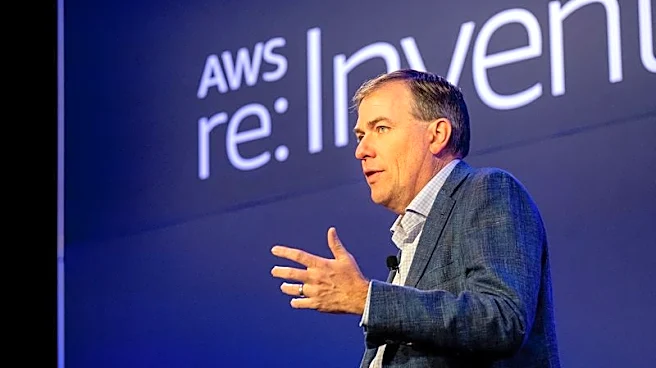
AWS CEO Matt Garman has asserted that AI safety should be rooted in robust engineering practices rather than relying on emergency shutdown mechanisms. Garman argues that existing security protocols, including
identity management, least privilege, logging, and containment, are applicable to AI systems. He emphasizes that the tools and techniques necessary for building trustworthy AI systems are already available. His core argument is that controls should be implemented externally to the AI model, as models are subject to frequent changes, while the foundational containment boundaries, observability layers, and independent controls remain constant. Garman likens this approach to car safety, where primary systems like steering and brakes are engineered for continuous safety, with the emergency brake serving as a last resort. He suggests that an over-reliance on 'kill switches' or emergency brakes can lead to poor risk management.
Why It's Important?
This perspective from a leading figure in cloud computing and AI infrastructure carries significant weight for the U.S. technology sector and beyond. Garman's emphasis on engineering discipline could influence how companies develop and deploy AI, shifting focus from reactive measures to proactive, integrated security. This approach could lead to more stable and predictable AI systems, fostering greater trust among users and regulators. For businesses, adopting these engineering principles might involve upfront investment in secure infrastructure and development practices, but could mitigate future risks associated with AI failures or misuse. It also highlights a potential divergence in AI safety strategies, with some advocating for 'kill switches' and others, like Garman, pushing for inherent, architectural safety. The debate impacts policy discussions, investment in AI research, and the competitive landscape among AI developers and cloud providers.
What's Next?
Following Garman's recommendations, tech companies, particularly those utilizing AWS for AI development, may re-evaluate their AI safety strategies to prioritize infrastructure-level controls. This could lead to increased adoption of practices such as creating separate identity types for AI agents with restricted permissions, implementing stronger containment measures, enhancing independent monitoring, and utilizing automated reasoning for formal verification of AI system properties. AWS itself is likely to continue developing and promoting its own tools and services, like Nitro hardware and Firecracker virtual machines, as examples of robust engineering solutions for AI safety. The ongoing dialogue between industry leaders and policymakers regarding AI regulation will likely incorporate these engineering-centric arguments, potentially shaping future standards and guidelines for AI development and deployment in the U.S.
Beyond the Headlines
Garman's stance on AI safety touches upon deeper ethical and philosophical considerations regarding the autonomy and control of advanced AI systems. By advocating for external, engineering-based controls, he implicitly suggests that AI models, despite their complexity, should always operate within human-defined boundaries and not be trusted to self-regulate. This approach could alleviate some public anxieties about 'rogue AI' by emphasizing human oversight and control through robust system design. It also underscores the critical role of infrastructure providers like AWS in shaping the future of AI safety, as their platforms form the backbone for many AI applications. The comparison to car safety highlights a broader societal challenge: how to integrate powerful new technologies safely and reliably into everyday life, moving beyond reactive emergency measures to proactive, integrated safety engineering.