






What's Happening?
Hollywood is facing concerns about a potential return of the #OscarsSoWhite controversy, as current predictions for the 2026 Academy Awards show a significant lack of diversity among nominees. According to Gold Derby's aggregated predictions in late October,
only three actors of color are projected to receive nominations across all four acting categories, and no directors of color are expected to be among the top five. In the lead acting races, nine out of ten projected slots are held by white performers, with Mexican Australian actress Inde Navarrette being the sole exception. This trend mirrors the situation in January 2015 and the following year, which led to the creation of the #OscarsSoWhite hashtag. The Academy has previously pledged to implement changes to address diversity issues, but data from the USC Annenberg Inclusion Initiative suggests that the problem originates further upstream within Hollywood itself. The study of 1,900 popular films, including those from 2025, indicates that while the percentage of underrepresented racial or ethnic characters has increased to 41.5%, Asian characters are the only group to show significant gains. Furthermore, many films still lack Black, Hispanic/Latino, or Asian characters, and women, particularly women of color, remain underrepresented in leading roles and directorial positions.
Why It's Important?
The potential resurgence of #OscarsSoWhite highlights a persistent systemic issue within the U.S. film industry regarding representation and inclusion. This lack of diversity in nominations not only impacts the careers of talented actors and filmmakers from underrepresented groups but also sends a message about whose stories and perspectives are valued in mainstream cinema. For audiences, particularly those from diverse backgrounds, it can lead to feelings of exclusion and a lack of relatable content. Economically, a lack of diverse representation can limit the industry's ability to tap into broader markets and audiences, potentially affecting box office performance and global appeal. The Academy's efforts to diversify its membership may be undermined if the films being produced and promoted do not reflect a wider range of voices and experiences. This situation underscores the ongoing challenge for Hollywood to move beyond performative gestures and implement meaningful, structural changes that foster genuine equity and inclusion at all levels of production and recognition.
What's Next?
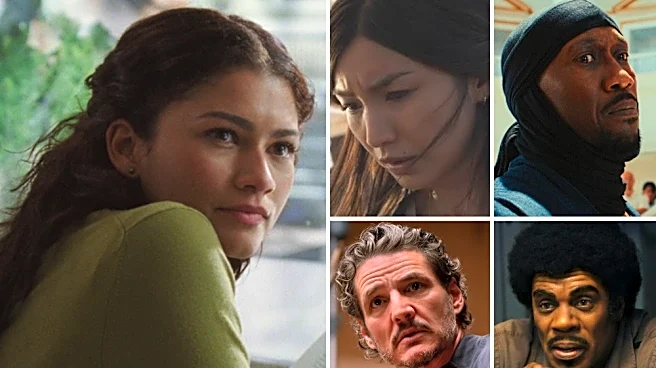
With nominations morning approximately ten weeks away, the focus will be on distributors to actively campaign for diverse performances and films. Critics' groups, whose year-end announcements significantly influence the awards season, are urged to consider a broader range of talent beyond the obvious contenders. Academy voters are also encouraged to engage with all available screeners to ensure a comprehensive evaluation of eligible works. Prominent figures like Zendaya, Colman Domingo, and Pedro Pascal are being highlighted as potential nominees who could help prevent a repeat of past diversity shortfalls. The industry will be closely watching to see if these efforts, combined with increased awareness, can shift the trajectory of the 2026 Academy Awards towards a more inclusive outcome. The ongoing dialogue around diversity and representation will likely intensify as the nomination period progresses, putting pressure on the Academy and studios to demonstrate tangible progress.
Beyond the Headlines
Beyond the immediate awards season, the #OscarsSoWhite discussion touches upon deeper ethical and cultural implications within the U.S. entertainment landscape. The consistent underrepresentation of certain groups in leading roles and behind the camera reflects broader societal biases and power imbalances. This issue extends beyond mere recognition; it influences cultural narratives, shapes public perception, and can impact the aspirations of aspiring filmmakers and actors from marginalized communities. The data from the USC Annenberg Inclusion Initiative suggests that the problem is not just about who gets nominated, but about who gets opportunities to create and lead projects in the first place. Addressing this requires a fundamental shift in how Hollywood identifies, develops, and supports talent, moving towards a more equitable ecosystem that values diverse storytelling and perspectives as integral to its future, rather than as an afterthought or a quota to be met. The long-term health and relevance of the U.S. film industry depend on its ability to authentically reflect the diverse society it serves.