




What's Happening?
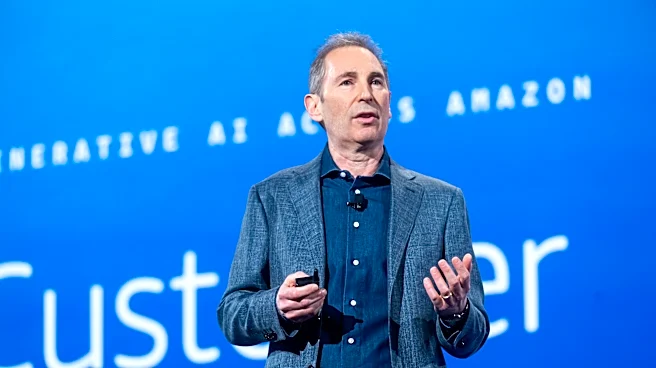
Amazon, through its Amazon Web Services (AWS) division, is making substantial investments in artificial intelligence (AI) infrastructure, which is currently impacting its free cash flow. AWS, recognized as the leading cloud service provider globally,
offers a comprehensive suite of AI products and services, ranging from specialized chips to large language models. These AI offerings have significantly boosted AWS's revenue growth, with its annual revenue run rate reaching $184 billion in the third quarter, and quarterly revenue soaring by 39% to $46 billion. This growth has positively influenced Amazon's overall revenue and operating income. However, to meet current and future demand in the rapidly expanding AI sector, Amazon has committed to significant capital expenditures, forecasting $220 billion for the full year. This substantial spending, primarily on new data centers and equipment, is exerting pressure on the company's free cash flow, a trend Amazon anticipates will continue until these new data centers become fully monetized.
Why It's Important?
Amazon's aggressive investment in AI infrastructure is a critical strategic move that underscores the company's commitment to maintaining its leadership in the cloud and AI markets. While these investments are currently impacting free cash flow, they are deemed necessary for future growth and to capitalize on the early stages of the AI revolution. The ability of AWS to integrate AI products and services seamlessly with its existing non-AI offerings has allowed it to supercharge growth by catering to existing customers' evolving needs. This strategy positions Amazon to benefit significantly from the long-term potential of AI, potentially solidifying its competitive advantage in both e-commerce and cloud services. The financial market's perception of Amazon's stock, currently trading at 23 times forward earnings estimates, suggests that investors view these investments as a worthwhile long-term play, despite the immediate pressure on cash flow. The success of Amazon Bedrock, the company's fastest-growing multi-billion-dollar service, further validates the company's AI strategy.
What's Next?
Amazon is expected to continue its substantial capital expenditures in AI infrastructure as it aims to monetize its new data centers and equipment. The company's focus will likely be on optimizing the operational efficiency of these new facilities to alleviate the pressure on free cash flow. Continued innovation in AI products and services, such as Amazon Bedrock, will be crucial for sustaining revenue growth within AWS. The market will closely monitor Amazon's ability to balance these significant investments with profitability, particularly as the AI sector matures. Future financial reports will provide insights into the effectiveness of these investments and their impact on Amazon's overall financial health and stock performance. The ongoing development and deployment of AI solutions across various industries will also influence the demand for AWS's cloud and AI services.
Beyond the Headlines
Amazon's massive AI spending highlights a broader industry trend where technology giants are pouring resources into AI development, recognizing it as a foundational technology for future economic growth. This investment spree could lead to increased consolidation in the cloud and AI markets, as smaller players may struggle to compete with the scale of investment from companies like Amazon. The emphasis on building out data centers also raises questions about energy consumption and environmental impact, given the significant power requirements of AI infrastructure. Furthermore, the rapid advancement of AI, driven by these investments, will likely accelerate the transformation of various industries, from healthcare to logistics, creating new opportunities and challenges for businesses and the workforce. The ethical implications of widespread AI deployment, including data privacy and algorithmic bias, will also become increasingly prominent as these technologies become more integrated into daily life.