







What's Happening?
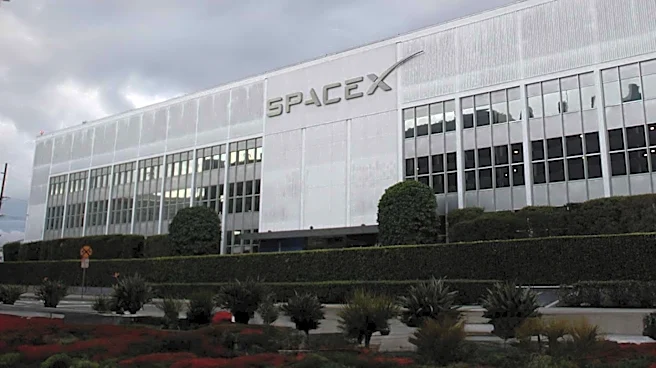
Pivotal Research has initiated coverage on SpaceX with a 'buy' rating and a price target of $220 per share, suggesting a potential 48% gain from Friday's closing price. The firm's optimistic outlook is largely predicated on SpaceX's ability to achieve
full reusability of its Starship launch vehicle. Analyst Jeffrey Wlodarczak emphasized that the company's current valuation of approximately $2 trillion hinges almost entirely on solving this significant engineering challenge. Starship, which has undergone 13 deployments with eight successful launches, has yet to demonstrate reusability from a previous flight. Wlodarczak believes that if SpaceX can successfully implement Starship reusability, enabling 20-50 flights per vehicle with rapid and inexpensive refurbishment, it will unlock immense opportunities for cost reduction, expansion of the Starlink satellite internet constellation, and easier deployment of orbital data centers. The analyst anticipates that Elon Musk will achieve this breakthrough, which could potentially grant SpaceX a near-monopoly in the orbital business model.
Why It's Important?
The successful reusability of Starship could revolutionize the space industry by drastically reducing the cost of space access. This would have profound implications for various sectors, including satellite internet, space tourism, and in-orbit manufacturing. For the U.S. economy, a more affordable and frequent access to space could spur innovation and create new industries, leading to job growth and technological advancements. Companies reliant on satellite technology, such as telecommunications and data services, would benefit from lower launch costs and increased capacity. Furthermore, if SpaceX achieves a dominant position in orbital services, it could influence global space policy and commercial competition. Conversely, failure to achieve Starship reusability would significantly undermine Pivotal Research's valuation and could lead to a reassessment of SpaceX's long-term prospects, impacting investor confidence and potentially slowing down the broader commercial space sector's growth.
What's Next?
The immediate focus for SpaceX will be on demonstrating the successful reusability of its Starship vehicle. Future Starship test flights will be closely watched for any progress in this area. If reusability is achieved, SpaceX is expected to accelerate the deployment of its Starlink constellation and explore new applications for its launch capabilities, such as orbital data centers. This could lead to increased competition in the satellite internet market and potentially lower prices for consumers. The company may also explore new business models, such as offering 'tolls' or equity stakes in emerging space companies in exchange for launch access, as theorized by Wlodarczak. The regulatory environment for space launches and orbital operations will also continue to evolve, potentially impacting SpaceX's expansion plans and market dominance.
Beyond the Headlines
The pursuit of Starship reusability represents a broader shift in the aerospace industry towards more sustainable and cost-effective space operations. Beyond the immediate financial implications for SpaceX, success in this endeavor could democratize access to space, enabling a wider range of scientific research, commercial ventures, and even human exploration. The concept of a 'monopoly' in orbital business, as suggested by Pivotal Research, raises questions about market competition and potential regulatory oversight in the burgeoning space economy. The ethical considerations of controlling access to a critical resource like space, and the potential for a single entity to dictate terms for other space-faring nations and companies, could become significant discussions. This technological leap could also accelerate the development of space-based infrastructure, potentially leading to new geopolitical dynamics and a redefinition of national interests in space.