






What's Happening?
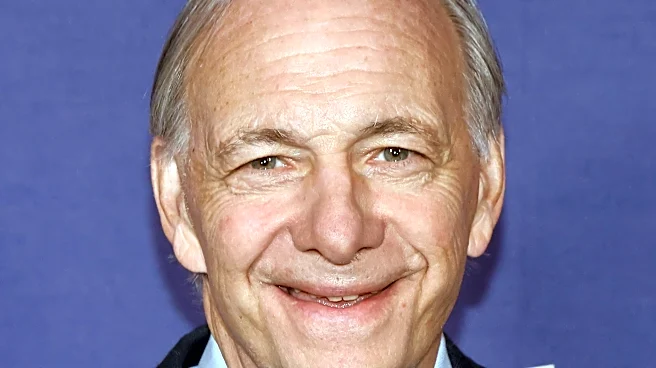
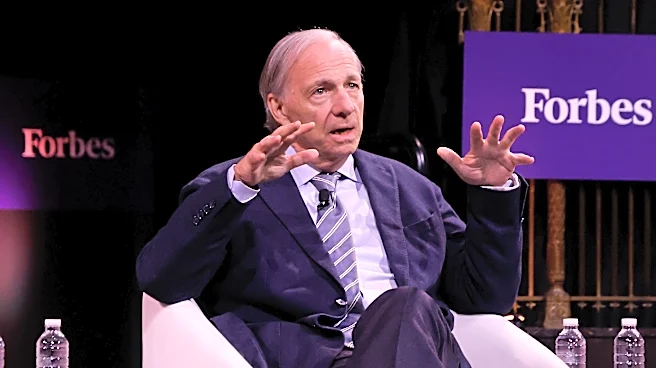
Billionaire investor Ray Dalio, founder of Bridgewater Associates, has expressed concerns that the artificial intelligence (AI) boom is entering a "classic bubble." Speaking at the Forbes Global CEO Conference in Singapore on October 7, Dalio distinguished
between the technological promise of AI and its investment viability, suggesting that while the technology is transformative, its current market trajectory mirrors historical bubbles seen with other groundbreaking innovations like railroads and the internet. He has been developing this argument throughout 2026, previously warning in January that the AI boom was in its early stages of a bubble following a prolonged rally in technology stocks. Dalio's broader concerns also encompass the uncertainty surrounding Federal Reserve policy and productivity growth, believing that the then-newly appointed Fed chair and FOMC were likely to push nominal and real interest rates down, which could inflate bubbles. Despite these warnings, Dalio's Bridgewater Associates has been actively investing in AI and chip stocks, with a focus on companies like Microsoft, Amazon, Alphabet, Broadcom, and GE Vernova.
Why It's Important?
Dalio's perspective is significant because it highlights a critical tension in the current U.S. investment landscape: the immense potential of AI technology versus the risk of an overheated market. His warning about a "classic bubble" suggests that investors might be overvaluing AI companies, potentially leading to a market correction that could impact a wide range of U.S. industries and individual investors. The comparison to past bubbles, such as the dot-com era, serves as a cautionary tale for those pouring capital into AI without sufficient scrutiny of underlying valuations. For U.S. businesses, a potential AI bubble burst could disrupt funding for innovation, impact stock market performance, and alter consumer confidence. Conversely, Dalio's continued investment in AI and chip stocks indicates a belief in the long-term fundamental value of the technology, suggesting that while the market may be frothy, the underlying technological advancements are real and will drive future economic growth. This dual stance underscores the complex and often contradictory signals investors face in rapidly evolving sectors.
What's Next?
The immediate future will likely see continued debate among financial experts regarding the sustainability of the AI market's growth. Investors will be closely watching for signs of market correction or further acceleration, particularly as interest rates and Federal Reserve policies continue to evolve. Dalio anticipates that the AI bubble could begin to burst once higher borrowing costs start to have a noticeable impact, suggesting that markets are approaching this inflection point. Companies heavily invested in AI, such as Microsoft, Amazon, and Alphabet, will need to demonstrate sustained profitability and return on investment from their AI initiatives to justify their current valuations. Regulatory bodies may also increase their scrutiny of market practices to prevent excessive speculation. The performance of these key AI and chip stocks, which Dalio's firm is investing in, will serve as a barometer for the broader AI market's health. The coming months will be crucial in determining whether Dalio's bubble warning materializes or if the AI sector can achieve more stable, long-term growth.
Beyond the Headlines
Beyond the immediate financial implications, Dalio's observations touch upon broader themes concerning technological disruption and economic cycles. The idea that transformative technologies inevitably produce bubbles raises questions about the inherent human tendency towards speculative excess during periods of rapid innovation. This pattern suggests that while AI promises profound societal benefits, the path to realizing these benefits is often fraught with economic volatility. Ethically, the management of AI technology, as Dalio notes, will determine how its advantages and disadvantages are shared, implying a need for thoughtful governance and equitable distribution of its economic gains. Legally, potential market corrections could trigger increased regulatory oversight to protect investors and ensure market stability. Culturally, the AI boom reflects a societal fascination with technological progress, but also a potential disconnect between technological enthusiasm and sound investment principles. The long-term shift could involve a more mature understanding of how to integrate revolutionary technologies into the economy without succumbing to speculative bubbles, fostering sustainable growth and broader societal benefit.