





What's Happening?
NIO's stock has experienced a significant decline, losing 49.8% over the past year, despite improvements in revenue and net margin between Q2 2025 and Q2 2026. The bearish outlook for NIO, which has anchored its Fair Value at US$3.00, is largely driven
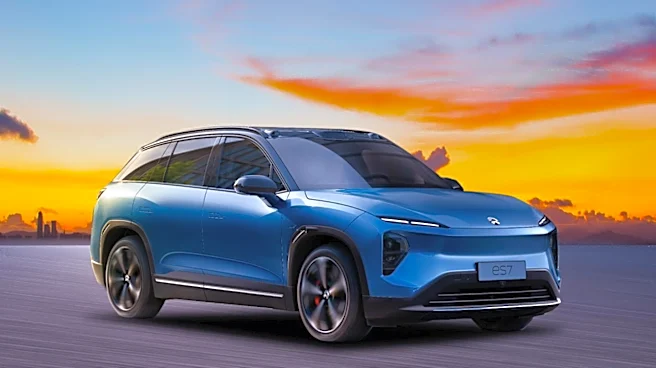
by concerns over higher tariffs outside China, excess capacity within China, and the risk of persistent thin or negative gross margins. While NIO achieved its first quarterly profit in Q4 2025 with record deliveries and an 18% vehicle margin, the optimistic profitability leap has not been fully sustained, with net margin remaining negative at 2.2%. Investors are weighing the company's efforts in battery swaps and digital services against the challenges posed by external tariffs and internal cost pressures, leading to a cautious market sentiment.
Why It's Important?
The performance of NIO's stock highlights the significant impact of international trade policies, specifically tariffs, on global automotive manufacturers, particularly those based in China. Higher tariffs outside China directly affect NIO's ability to expand into international markets, limiting its potential revenue streams and profitability. This situation also underscores the challenges faced by electric vehicle (EV) companies in achieving sustainable profitability amidst intense competition, overcapacity, and the high costs associated with technological innovation and market expansion. For U.S. investors, NIO's struggles reflect broader risks associated with investing in companies heavily exposed to geopolitical trade tensions and the volatile EV market, where profitability can be elusive despite strong sales growth.
What's Next?
NIO's future performance will largely depend on its ability to navigate the challenges of higher tariffs in international markets and to consistently improve its gross margins. The company's strategy of leveraging multi-brand volume, battery swap usage, and tighter cost control will be critical. Investors will closely monitor whether these initiatives translate into durable orders and repeat service revenue. The broader market will also be watching for any changes in tariff policies that could either alleviate or exacerbate NIO's international expansion challenges. The company's ability to convert its investments in premium SUVs, battery swapping, and smart driving into sustained profitability will be key to its stock recovery.
Beyond the Headlines
NIO's situation reflects a broader trend in the global automotive industry, where geopolitical factors and trade protectionism are increasingly influencing market dynamics and corporate strategies. The focus on tariffs outside China suggests a growing fragmentation of the global EV market, potentially leading to regionalized production and supply chains. This could force EV manufacturers to adapt their business models to operate more independently within different economic blocs, rather than pursuing a fully globalized strategy. Furthermore, the persistent margin pressures highlight the intense competition and capital-intensive nature of the EV sector, where even innovative companies struggle to achieve consistent profitability, raising questions about the long-term sustainability of some players in the market.