









What's Happening?
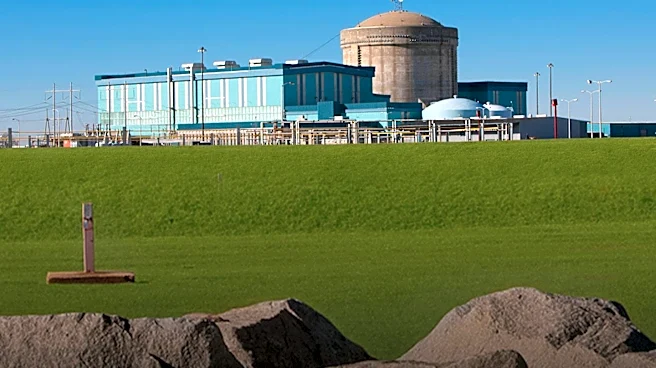
Walmart has entered into a significant agreement with Constellation Energy to procure nuclear power from the Dresden Clean Energy Center in Illinois. This marks Walmart's first nuclear power purchase agreement, aligning with its commitment to achieve
zero emissions across its global operations by 2040. The deal, announced on June 23, will provide Walmart with 176 megawatts of wholesale electricity supply in two 15-year contract periods starting in 2029 and 2030. This initiative is part of Walmart's broader strategy to expand access to affordable, reliable, and clean energy. The power will support Walmart's operations in Illinois, including a high-tech perishable distribution center currently under development in Belvidere. Constellation's energy production in Illinois is substantial, capable of powering over 8 million homes, and Walmart operates approximately 175 stores and clubs in the state.
Why It's Important?
This agreement is a pivotal step for Walmart in its pursuit of sustainability and emissions reduction. By securing nuclear power, Walmart is not only advancing its environmental goals but also setting a precedent for other retailers to follow. The move highlights a growing trend among large corporations to invest in nuclear energy as a reliable and emissions-free power source. This shift is particularly significant as it diversifies the energy portfolio of companies traditionally reliant on fossil fuels. The partnership with Constellation also underscores the potential for nuclear energy to play a crucial role in corporate sustainability strategies, especially for companies with extensive operational footprints like Walmart. The deal could influence other retailers and industries to consider nuclear power as a viable option for reducing carbon emissions.
What's Next?
Walmart's commitment to nuclear power is likely to encourage further investments in clean energy technologies. As the company progresses towards its 2040 zero emissions target, it may explore additional renewable energy sources and efficiency upgrades. The success of this partnership could lead to similar agreements with other energy providers, potentially accelerating the adoption of nuclear power in the retail sector. Stakeholders, including environmental groups and industry competitors, will be closely monitoring the outcomes of this initiative. Additionally, the development of Walmart's distribution center in Belvidere will be a key focus, as it represents a tangible application of the clean energy procured through this agreement.
Beyond the Headlines
The decision to invest in nuclear power reflects a broader shift in corporate energy strategies, where sustainability and reliability are increasingly prioritized. While nuclear energy offers a stable and emissions-free power source, it also raises concerns about radioactive waste management and safety. Walmart's move may prompt discussions on the regulatory and ethical implications of expanding nuclear energy use in the private sector. Furthermore, this development could influence public perception of nuclear power, potentially leading to increased acceptance and support for its role in achieving climate goals.