

What's Happening?
Meshell Ndegeocello has released her new album, 'Synonym,' which is her third album under Blue Note Records. This project is a collection of reimagined cover songs, featuring a wide array of guest artists. The album follows her previous Blue Note releases,
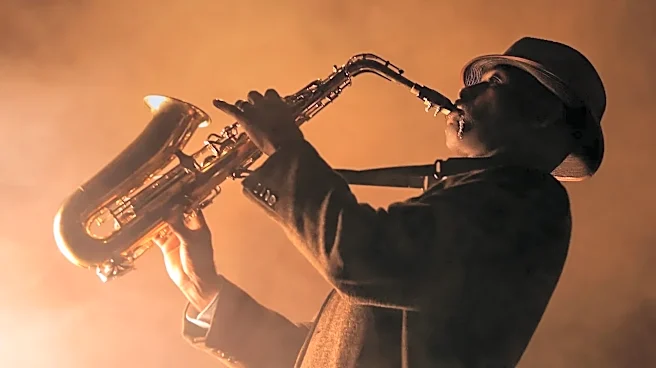
'The Omnichord Real Book' from 2023 and 'No More Water: The Gospel Of James Baldwin' from 2024. 'Synonym' draws material from several decades and genres, including 1960s folk, 1970s soul, country, pop, 1980s R&B and electro-boogie, early-1990s alternative rock, and early-2000s hip-hop. Notable guests on the album include Cynthia Erivo, Cat Power, Chaka Khan, Brandi Carlile, Bill Callahan, Chris Thile, Nick Hakim, Robert Glasper, Madison Cunningham, Laura Lee of Khruangbin, Lizz Wright, Emily King, Lianne La Havas, Moses Sumney, Destin Conrad, ANOHNI, WILLOW, Evann McIntosh, and Ink. Many of the songs are presented as duets between performers who identify as the same gender or share a similar emotional continuum. David Gamson, who produced Ndegeocello's first two albums, co-produced 'Synonym' with Ndegeocello and Abe Rounds. The album also features musicians such as Abe Rounds and Deantoni Parks on drums, guitarist Chris Bruce, keyboardists Jake Sherman, Jebin Bruni, and Larry Goldings, saxophonists Josh Johnson and Levon Henry, flutist Elena Pinderhughes, and banjoist Bela Fleck.
Why It's Important?
Meshell Ndegeocello's release of 'Synonym' is significant for the music industry, particularly within the jazz and alternative genres, as it showcases her continued artistic evolution and commitment to collaborative projects. Her previous two Blue Note releases each earned her a Grammy Award, indicating a high level of critical acclaim and influence. This new album, with its diverse range of guest artists and genre-spanning covers, could further solidify her reputation as an innovative and boundary-pushing musician. The album's focus on reimagining classic songs through a contemporary lens, and its emphasis on duets between artists sharing similar identities or feelings, offers a fresh perspective on musical interpretation and collaboration. This approach could inspire other artists to explore similar creative avenues, fostering a more inclusive and experimental environment within the music scene. Furthermore, Ndegeocello's stated intention to move towards more collective music-making, rather than solely self-centered albums, highlights a potential shift in artistic production models, emphasizing shared creativity and diverse voices.
What's Next?
Following the release of 'Synonym,' Meshell Ndegeocello is likely to engage in promotional activities, which may include interviews, live performances, and potentially a tour to support the album. Given her history of Grammy-winning work, 'Synonym' will likely be a strong contender for future music awards, potentially bringing further recognition to Ndegeocello and her collaborators. The album's thematic focus on 'queer liberation as a synonym for liberation of all kinds' suggests that it may resonate deeply with various social and cultural movements, potentially sparking discussions and further engagement beyond the music itself. Her expressed desire to pursue more collective music projects indicates that future releases may continue to feature extensive collaborations and diverse artistic voices. This could lead to a series of albums that prioritize shared creative endeavors, potentially influencing how other artists approach their own projects and fostering a more collaborative spirit within the music industry.
Beyond the Headlines
The title 'Synonym' and Ndegeocello's explanation of its meaning — 'different expressions carrying shared meaning' and 'queer liberation as a synonym for liberation of all kinds' — point to deeper cultural and philosophical implications. This album transcends mere musical covers, positioning itself as a commentary on identity, shared human experience, and the power of reinterpretation. By presenting songs as duets between performers who identify similarly or share a 'continuum of feeling,' Ndegeocello subtly challenges traditional notions of artistic collaboration and representation. This approach could foster a greater sense of belonging and visibility for marginalized communities within the arts. The album's exploration of diverse genres and eras also highlights the timelessness of certain emotional and thematic undercurrents in music, suggesting that while forms may change, core human experiences remain constant. This project could serve as a significant cultural artifact, reflecting contemporary discussions around identity, liberation, and the evolving nature of artistic expression.