





What's Happening?
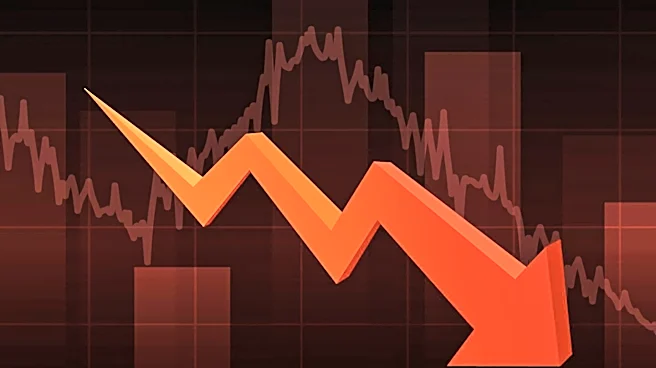
Invesco notes a significant level of investor pessimism, with the AAII Investor Sentiment Survey bull-bear spread at a historically low eighth-percentile reading of minus 21. This bearish sentiment persists despite the market experiencing double-digit
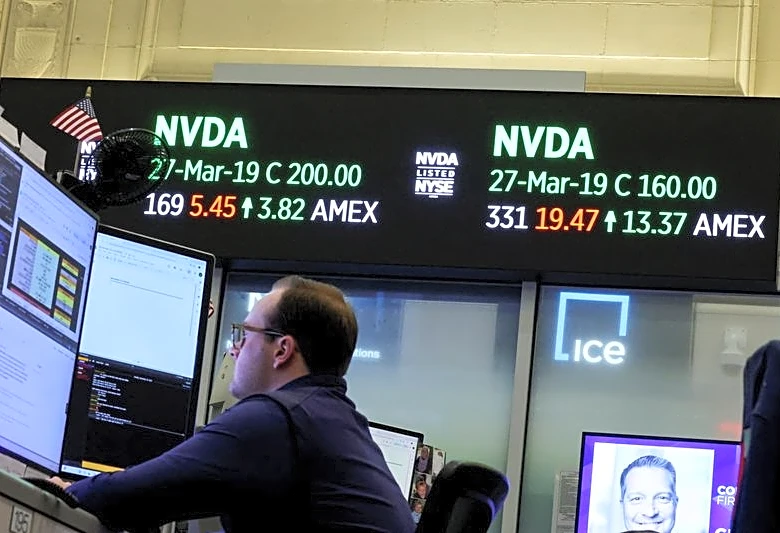
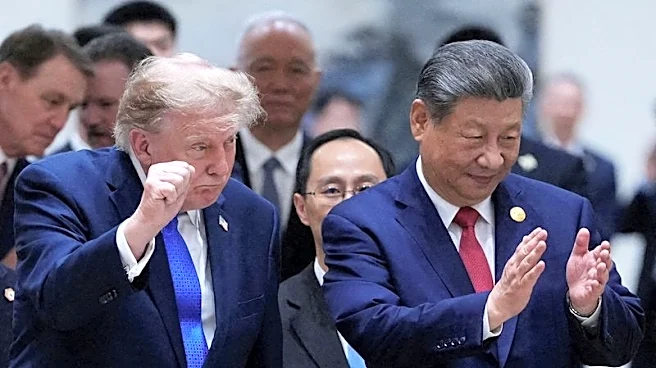
earnings growth and valuations that are currently below their five-year average. The S&P 500 Index has fallen below its 200-day moving average for the fourth time since mid-2023. This market volatility is largely attributed to heightened policy uncertainty. One key factor is Washington's evolving stance on advanced chip sales, particularly to China, which impacts companies like Nvidia. Investors are concerned about potential restrictions on products, the broadening of such limitations to other chips or markets, and the overall effect on the addressable market for U.S. semiconductor firms. Another source of uncertainty stems from the Federal Reserve, following Governor Christopher Waller's suggestion of a potential 50-basis-point rate hike, which temporarily increased short-term interest rates and pressured even defensive sectors.
Why It's Important?
The current market sentiment, characterized by high pessimism despite strong corporate fundamentals, presents a complex landscape for U.S. investors and the broader economy. The policy uncertainty surrounding chip sales to China directly impacts the technology sector, particularly major semiconductor companies, by creating ambiguity around their future market access and revenue streams. This could lead to continued volatility and re-evaluation of tech stock valuations. Furthermore, the Federal Reserve's hawkish signals regarding interest rates introduce uncertainty into monetary policy, potentially affecting borrowing costs for businesses and consumers, and influencing investment decisions across all sectors. While valuations for many companies, including Nvidia, have compressed, suggesting potential buying opportunities, the prevailing uncertainty could deter new investments. The divergence between investor sentiment and strong earnings growth indicates a market grappling with external policy pressures rather than fundamental economic weakness, making it crucial for stakeholders to monitor policy developments closely.
What's Next?
Investors will likely continue to closely monitor policy developments from Washington regarding technology exports, especially concerning advanced chips and trade relations with China. Any clarity or further restrictions in this area could significantly impact the outlook for U.S. semiconductor companies and the broader technology sector. Similarly, upcoming statements and actions from the Federal Reserve will be critical in shaping market expectations for interest rates. Should the Fed proceed with more aggressive rate hikes, it could further pressure market valuations and potentially slow economic activity. Conversely, if inflation data continues to show moderation and the Fed adopts a less hawkish stance, it could alleviate some market anxieties. The market will also be watching corporate earnings reports for continued strength, particularly from key technology players, to assess whether fundamental performance can eventually overcome policy-driven pessimism. The current 'risk-off' environment suggests that investors may remain cautious, seeking clearer signals on both geopolitical and monetary policy fronts before committing to more aggressive positions.
Beyond the Headlines
The current market dynamics highlight a growing intersection between geopolitical strategy and economic performance, particularly in the technology sector. The U.S. government's approach to advanced chip sales to China is not merely a trade policy but a strategic move aimed at national security and technological leadership, which has direct economic consequences for U.S. companies. This situation underscores the increasing politicization of global supply chains and technological innovation. Furthermore, the market's reaction to Federal Reserve communications demonstrates the profound influence of central bank signaling on investor behavior and market stability, even when underlying economic data appears robust. This period could also signal a shift in investment paradigms, where geopolitical risk assessment becomes as critical as traditional financial analysis. The long-term implications could include a re-shoring or diversification of supply chains, increased government intervention in strategic industries, and a more volatile investment environment where policy decisions can rapidly alter market conditions and corporate prospects.